Pontoise, France
- 30,290 people
- 13 places to visit
- 49.051, 2.1006
Places to Visit (13)
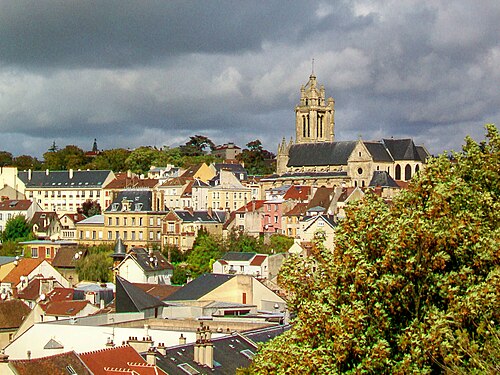
Pontoise is a commune located in the northern suburbs of Paris, France, within the department of Val-d'Oise in the Île-de-France region. It lies approximately 30 kilometers (about 19 miles) northwest of the French capital and is situated on the banks of the river Oise. Pontoise has a rich history, dating back to Roman times when it was known as "Pontoise" or "Pontoisium." The city played a significant role in the medieval era, serving as a vital center for trade and an important site due to its strategic location. Pontoise is also notable for its historical architecture, including the impressive Gothic-style Cathedral of Saint-Maclou, which highlights the city's medieval heritage.
The city is often associated with the Barbizon school of painters, a group of artists who were active in the mid-19th century and sought to capture the beauty of the natural landscape. The area around Pontoise was particularly favored because of its picturesque scenery, which attracted notable artists such as Camille Pissarro, Claude Monet, and Vincent van Gogh. As a result, Pontoise has become an important cultural site, with museums and exhibitions celebrating its artistic legacy. In modern times, the city combines its historical charm with contemporary amenities, developing a vibrant community that offers a blend of residential, commercial, and recreational spaces.
Pontoise is well-connected to Paris via a robust transportation network, including a direct rail service that allows for easy commuting. The city's demographic profile reflects its transition from a traditional urban center to a dynamic suburb accommodating a diverse population. Pontoise also offers various educational institutions, parks, and cultural activities, making it an attractive location for families and professionals alike. Additionally, the commune is known for its local markets, gardens, and green spaces, promoting a healthy quality of life for its residents while preserving its historical character. Overall, Pontoise stands out as a city that honors its rich past while embracing a progressive future.
Facts about Pontoise
- Pontoise is known for its stunning medieval architecture, including the Cathedral of Saint-Maclou, which dates back to the 12th century.
- The city is situated on the banks of the Oise River and has a rich history as an important river port, dating back to ancient Roman times.
- Pontoise was the birthplace of the French painter Camille Pissarro, a key figure in the Impressionist movement, and is often associated with the Pissarro Museum.
- Historically, Pontoise served as a military stronghold during the Hundred Years' War, featuring fortified walls and defensive structures.
- The city is famous for its charming old town, characterized by its narrow streets and half-timbered houses, which reflect the architectural styles of the Middle Ages.
- Pontoise hosts an annual festival called 'Les Musicales de Pontoise', celebrating music with performances across various genres.
- In the 19th century, Pontoise became a popular destination for artists and writers, contributing to the cultural enrichment of the area.
- The former monastery of the Cordeliers in Pontoise has been transformed into a cultural venue, showcasing art exhibitions and community events.
- Pontoise has a notable historical connection to the painter Vincent van Gogh, who lived in the nearby town of Auvers-sur-Oise and frequently visited Pontoise.
- The city is part of the Val-d'Oise department and is recognized for its role in the development of regional agriculture, especially in horticulture.