Port-de-Paix, Haiti
- 306,217 people
- 1 places to visit
- 19.9349, -72.8309
Places to Visit (1)
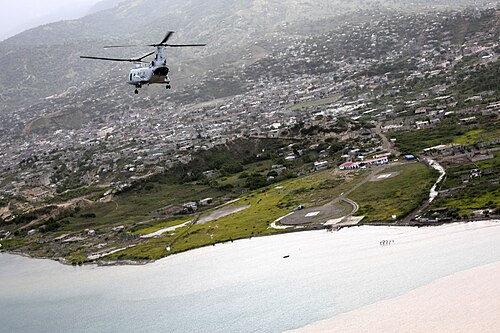
Port-de-Paix is a coastal city situated in the northwest region of Haiti, serving as the capital of the Nord-Ouest department. With a population of around 100,000 residents, it stands as one of the key urban centers in a region known for its agriculture and fishing industries. Port-de-Paix has a rich historical background, with roots tracing back to its establishment in the 17th century. The city played a significant role during the colonial period and was an early site of revolutionary activities against French rule. Today, remnants of this history are visible in the local architecture and cultural practices.
Economically, Port-de-Paix relies heavily on agriculture, with crops like bananas, sugarcane, and coffee being significant contributors to the local economy. Fishing is also crucial, given the city's coastal location, and many residents participate in small-scale fishing operations. The city’s port is vital for importing goods and exporting local products, connecting the region to broader markets. Despite its economic activities, Port-de-Paix faces challenges, including infrastructural deficits and limited access to basic services such as clean water and healthcare. Natural disasters, particularly hurricanes, have also posed threats to the city's growth and stability, with the population often needing to rebuild in the wake of such events.
Culturally, Port-de-Paix boasts a vibrant tapestry of Haitian traditions, influenced by indigenous, African, and European heritages. The city is known for its lively music scene, particularly the style known as "compas," and hosts various festivals that celebrate local art, music, and cuisine. The nearby Labadee beach and other natural attractions draw visitors to the area, contributing to a burgeoning tourism sector. Despite its challenges, Port-de-Paix remains a city of resilience and potential, embodying the spirit of its people who strive to improve their livelihoods and preserve their rich cultural legacy.
Facts about Port-de-Paix
- Port-de-Paix is known as the oldest city in Haiti, founded in 1665.
- It served as the first capital of Haiti before Port-au-Prince took over that role.
- The city is famous for its stunning beaches, including the popular Labadee beach, which is a frequent cruise ship port.
- Port-de-Paix is renowned for its fishing industry, often being referred to as a fishing capital of Haiti.
- The city hosts the Festival of the Sea each July, celebrating its rich maritime heritage.
- The Citadelle Laferrière, a UNESCO World Heritage site, is not far from Port-de-Paix and is a significant historical landmark in the region.
- Port-de-Paix has a unique cultural blend, influenced by its indigenous Taíno heritage and colonial past.
- It is home to the famous Church of St. John the Baptist, a significant architectural landmark and symbol of the city.
- The city's economy is also supported by agriculture, particularly the cultivation of crops like coffee and cocoa.
- Port-de-Paix is less populated than many other major cities in Haiti, offering a quieter lifestyle while still being a vital part of the country's history and culture.