Porto Velho, Brazil
- 548,952 people
- 17 places to visit
- -8.7636, -63.8972
Places to Visit (17)
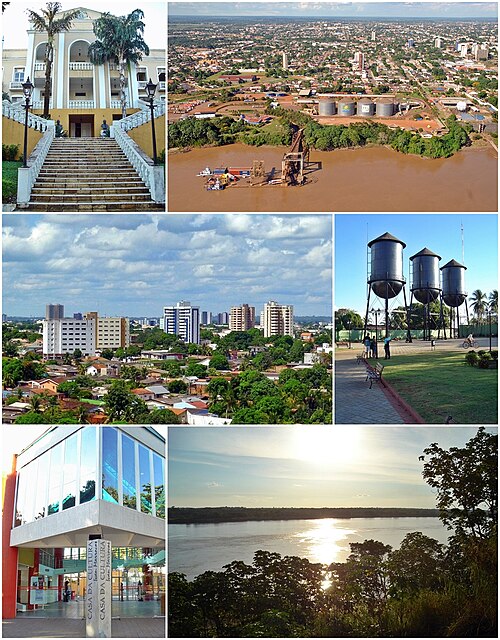
Porto Velho is the capital city of the state of Rondônia in Brazil, located in the northwestern part of the country. It sits at the confluence of the Madeira River and the Guaporé River, playing a crucial role as a transportation hub for both land and water routes. Founded in 1915 with the arrival of the Madeira-Mamoré Railroad, the city grew rapidly as a center for the rubber boom, drawing workers and settlers to the region. Today, Porto Velho is known for its rich Amazonian culture and diverse ecosystems, serving as a gateway to the surrounding rainforest.
The population of Porto Velho is estimated to be around half a million inhabitants, reflecting a diverse mix of indigenous peoples, migrants from various Brazilian states, and other nationalities. This multicultural background is evident in the city's vibrant festivals, cuisine, and traditions. The economy of Porto Velho is primarily driven by agriculture, mining, and services, with a growing emphasis on eco-tourism as more visitors become interested in the Amazon's unique biodiversity and natural beauty. Key attractions in and around the city include the historic railway station, the area around the Madeira River, and the stunning landscapes of the nearby national parks.
Despite its growth and development, Porto Velho faces significant challenges, including infrastructural issues, deforestation, and environmental concerns associated with urbanization. The government and various organizations are working on sustainability initiatives to tackle these problems while preserving the natural heritage of the region. Porto Velho stands out as a unique blend of urbanization and nature, striving to balance modern living with the preservation of its rich ecological and cultural legacy.
Facts about Porto Velho
- Porto Velho was founded in 1915 and served as a strategic hub during the rubber boom in the Amazon region.
- The city is located at the confluence of the Madeira River and the Amazon River, making it a significant transportation and trade point.
- Porto Velho is home to the Madeira-Mamoré Railway, a historic railway built to facilitate the transport of rubber and other goods; it is often referred to as the 'Railway of Death' due to the harsh working conditions and many fatalities during its construction.
- The city has a rich cultural heritage influenced by Indigenous peoples, Portuguese colonizers, and immigrants from various countries, contributing to its diverse population and unique identity.
- Porto Velho is known for the annual Festival of Folklore, which celebrates local traditions, music, and dance, showcasing the cultural diversity of the region.
- As the capital of the state of Rondônia, Porto Velho hosts several governmental institutions and is a major administrative center in the northern part of Brazil.
- The city's economy is significantly bolstered by the hydroelectric power generated by the nearby Madeira River, particularly from the Santo Antônio and Jirau dams.
- Porto Velho is known for its vibrant street art scene, with numerous murals and installations that reflect the city's history and culture.
- The Porto Velho Historic Center has a number of colonial-style buildings, clock towers, and churches that reflect the city’s early 20th-century architecture.
- The city has a tropical rainforest climate, characterized by high humidity and significant rainfall, making it distinct in its natural environment compared to many other Brazilian cities.