Potsdam, Germany
- 182,112 people
- 18 places to visit
- 52.3906, 13.0645
Places to Visit (18)
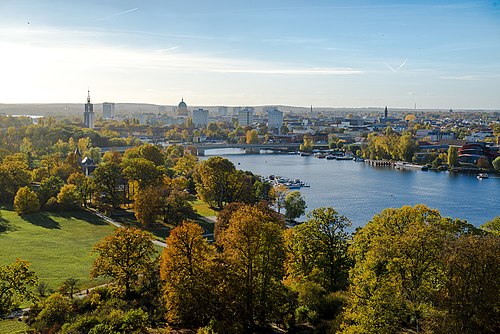
Potsdam is the capital city of the state of Brandenburg, Germany, located just southwest of Berlin. It has a rich historical legacy and is renowned for its picturesque landscapes, parks, and palaces, many of which are UNESCO World Heritage Sites. The city has a population of approximately 180,000 residents and covers an area of around 187 square kilometers. Its history dates back to the medieval period but gained prominence in the 18th century when it became the summer residence of the Prussian kings. Under Frederick the Great, the city experienced significant development, leading to the construction of remarkable structures such as the Sanssouci Palace, designed in the Rococo style, which remains one of Germany's most important cultural landmarks.
Potsdam is also known for its unique architectural blend, with influences from various periods and styles, including Dutch, Italian, and neoclassical designs. The historic city center is home to the Brandenburg Gate and the intricate Dutch Quarter, characterized by red-brick houses reflecting the city's connections to Dutch immigrants. In contemporary times, Potsdam has become a center for the film industry, most notably through the Babelsberg Film Studio, considered one of the oldest large-scale film studios in the world, which has been the birthplace of many German and international film productions. Additionally, the city is a hub for science and education, housing several institutions, including the University of Potsdam and the Potsdam Institute for Climate Impact Research. With its rich history, stunning architecture, and vibrant cultural scene, Potsdam remains a significant destination in Germany, attracting visitors and scholars alike.
Facts about Potsdam
- Potsdam is famous for its historical Sanssouci Palace, a UNESCO World Heritage Site, often referred to as the 'Prussian Versailles'.
- The city was the residence of Frederick the Great, King of Prussia, and is known for its beautiful gardens and Rococo architecture.
- Potsdam was the site of the Potsdam Conference in 1945, where Allied leaders convened to discuss the post-war order in Europe.
- The city is home to the film studio Babelsberg, one of the oldest and most significant film studios in the world, known for producing many famous films.
- Potsdam features the unique Dutch Quarter (Holländisches Viertel), characterized by red-brick buildings constructed by Dutch artisans in the 18th century.
- The Glienicke Bridge, connecting Potsdam and Berlin, is known as the 'Bridge of Spies' due to its historical significance during the Cold War for exchanging captured spies.
- Potsdam has a rich cultural life, hosting the annual Potsdam Film Festival and the historic Sanssouci Music Festival.
- The city has a distinct feature of numerous lakes and parks, including the expansive Telegrafenberg park and the scenic Lake Wannsee.
- Potsdam is home to the University of Potsdam, known for its research in the humanities and social sciences, as well as environmental sciences.
- The city boasts a diverse architectural landscape, influenced by various styles, including Baroque, Classical, and Modernist designs.