Prato, Italy
- 195,089 people
- 17 places to visit
- 43.8777, 11.1022
Places to Visit (17)
Prato, a city in Tuscany, Italy, is renowned for its rich textile history and vibrant cultural heritage. Located approximately 20 kilometers northwest of Florence, it is the second-largest city in the region and serves as an important industrial center, particularly in textile manufacturing. Prato's textile industry has roots tracing back to the Middle Ages, making it one of Italy's key centers for wool and fabric production. The city is home to numerous factories that specialize in the production of high-quality fabrics, which have significantly contributed to both local and international markets.
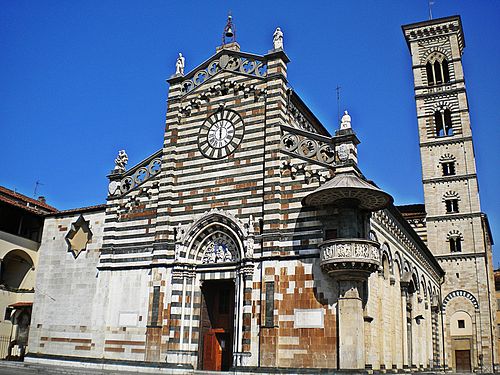
Architecturally, Prato showcases a blend of medieval and modern influences, highlighted by its historical landmarks, including the Prato Cathedral, dedicated to Saint Stephen and featuring a notable polychrome façade. The cathedral houses valuable artworks, such as frescoes by the Renaissance master Paolo Uccello. Another significant site is the Castello dell'Imperatore, a fortress built in the 13th century that reflects the city's historical role as a defensive stronghold. The city's cultural scene is vibrant, with numerous museums, such as the Museo del Tessuto, which celebrates Prato's textile heritage, and important art galleries that feature local and contemporary artists. The annual Prato Music Festival further enhances its cultural landscape, attracting visitors from all over Italy and beyond.
In addition to its industrial and cultural significance, Prato enjoys a growing population, rich culinary traditions, and a pleasant climate, making it an attractive place to live and visit. Its strategic location near Florence makes it a popular option for those seeking to explore the broader Tuscan region while enjoying a more relaxed pace of life. With its blend of history, industry, and culture, Prato continues to thrive as a distinctive city that offers a unique insight into the Tuscan way of life.
Facts about Prato
- Prato is home to the largest Chinese community in Italy, significantly influencing the city's culture and economy.
- The city's textile industry dates back to the 13th century, making it a historical center for wool and textile production in Tuscany.
- Prato boasts the beautiful and well-preserved Cathedral of Santo Stefano, known for its stunning Romanesque architecture and artworks.
- The Basilica of Santa Maria delle Carceri, designed by renowned architect Giuliano da Sangallo, is a significant example of Renaissance architecture in Prato.
- Prato hosts the 'Prato Textile Museum' (Museo del Tessuto), which showcases the history and evolution of the textile industry in the region.
- The city celebrates an annual festival called 'Prato in Festa,' highlighting local crafts, food, and traditions.
- Prato's Castello dell'Imperatore (Castle of the Emperor) is a historical fortress that reflects the city’s medieval past and was commissioned by Frederick II.
- The city is known for the 'Poggio a Caiano' Medici villa, a UNESCO World Heritage site, which symbolizes the power of the Medici family during the Renaissance.
- The city's unique 'Prato's Ricotta' is a traditional cheese that has protected designation of origin status, highlighting the region's culinary heritage.
- Prato is located conveniently in Tuscany, making it a strategic hub for trade and travel while maintaining its distinct cultural identity.