Ptolemaḯda, Greece
- 30,045 people
- 2 places to visit
- 40.513, 21.6785
Places to Visit (2)
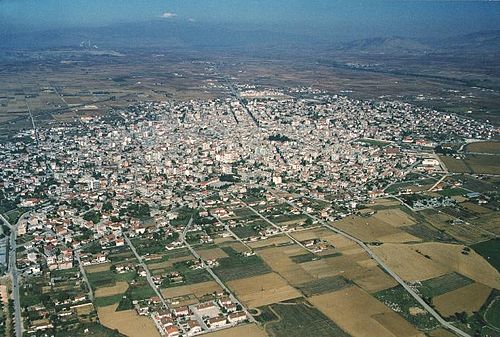
Ptolemaḯda, a city in northern Greece, serves as the capital of the municipality of Ptolemaida in the Western Macedonia region. Established in 1951, it was created to accommodate the workforce migrating to the area for the burgeoning lignite mining industry. The city was named after Ptolemy II Philadelphus, the Macedonian king, reflecting the region's historical ties to ancient Hellenistic influences. Located approximately 16 kilometers south of the city of Kozani, Ptolemaḯda has grown significantly since its inception, largely due to the coal mining activities that have shaped its economy and social fabric.
A key feature of Ptolemaḯda is its proximity to several lignite mines, making it a vital hub for energy production in Greece. The Public Power Corporation (PPC) operates a major power plant in the area, which has historically been one of the largest sources of electricity for the country. The city's population has steadily increased over the decades, leading to a diverse community that blends modern infrastructure with cultural heritage. Besides its industrial significance, Ptolemaḯda is also known for its educational institutions, including the Technological Educational Institute of Western Macedonia, which attracts students from across Greece.
Cultural life in Ptolemaḯda reflects both traditional Macedonian practices and contemporary influences, with various festivals and events highlighting local customs. The city has several recreational areas, green spaces, and historical sites, allowing residents and visitors alike to engage with both nature and history. Despite economic challenges tied to the decline of coal dependency and the transition to renewable energy, Ptolemaḯda remains a significant player in Greece's energy landscape while continually adapting to meet the demands of a changing world.
Facts about Ptolemaḯda
- Ptolemaḯda, known in antiquity as Ptolemaïs, was established in the 3rd century BC during the reign of the Ptolemaic dynasty, making it one of the historical cities with ancient Greek origins.
- The city is renowned for its unique layout, which was designed in a grid pattern, an urban planning concept that was innovative for that time period.
- Ptolemaḯda was a significant center for the production of silk and textiles, contributing to its economic importance in the region during the Byzantine period.
- The nearby archaeological site of 'Archaeological site of Ptolemaida' includes remains of ancient Hellenistic buildings and structures, providing insights into the urban life of the era.
- The Ptolemaḯda area is known for its natural beauty, particularly the nearby Lake Vegoritis, which is a significant ecological and recreational resource.
- In the modern era, Ptolemaḯda is recognized for its thermal springs, making it a popular destination for wellness tourism, unlike many other cities in Greece.
- The city hosts the renowned 'Festival of Ptolemaida' that celebrates local culture, arts, and traditions, distinguishing it from other regional celebrations in Greece.
- Ptolemaḯda has a diverse demographic, with a mix of historic influences from ancient Greek, Byzantine, and Ottoman cultures evident in its architecture and local traditions.
- The city is home to the 'Ptolemaida Cultural Center', which promotes local arts, music, and education, playing a vital role in the community's cultural development.
- Ptolemaḯda has a unique annual event, the 'Ptolemaida Sheep Festival', celebrating local agricultural practices and culinary traditions, unique to the region.