Puertollano, Spain
- 51,842 people
- 9 places to visit
- 38.6884, -4.1079
Places to Visit (9)
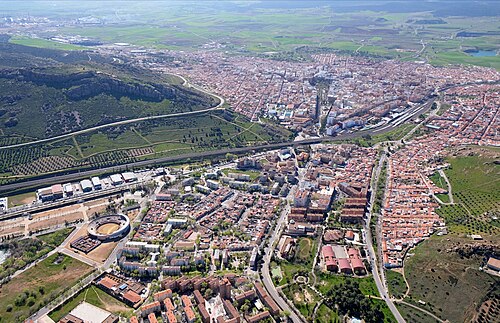
Puertollano is a municipality located in the province of Ciudad Real in the autonomous community of Castilla-La Mancha, Spain. Situated approximately 170 kilometers south of Madrid, the city has a rich history that dates back to the prehistoric era. Notable archaeological finds, such as the "Cueva de los Murciélagos," highlight the area's ancient human activity. Originally established around a Roman settlement, Puertollano flourished through various periods, particularly during the industrial revolution in the 19th century, which significantly shaped its socio-economic landscape. The town emerged as a vital center for mining and metallurgy, especially for coal extraction, which attracted a wave of workers and industries, contributing to its rapid development and urbanization.
Modern Puertollano is characterized by its blend of industrial and residential areas, with a diverse economy that includes energy production, manufacturing, and service sectors. The city is well-known for its large-scale renewable energy initiatives and is home to one of the largest photovoltaic solar plants in Europe. Puertollano's strategic location along the key transport routes enhances its accessibility and economic potential, linking it effectively with larger cities like Ciudad Real and Madrid. Despite its industrial roots, the city also places emphasis on green spaces and public parks, providing a balance between urban life and ecological sustainability. Cultural events and local festivals, such as the Feria and Semana Santa, showcase the region's traditions and foster community spirit, making Puertollano a vibrant place to live and visit.
Facts about Puertollano
- Puertollano is known for its significant industrial history, particularly in coal mining and chemical industries, making it one of the key industrial centers in Spain.
- The city hosts the 'Museo del Ferrocarril de Puertollano', a railway museum that highlights the importance of rail transport in the region's development.
- Puertollano was one of the first cities in Spain to introduce a comprehensive waste management system, paving the way for sustainable urban development.
- The city's annual festival, 'La Semana Santa de Puertollano,' features unique religious processions that reflect deep-rooted local traditions and culture.
- It is home to the 'Parque de las Américas', a recreational area dedicated to various American countries, which adds a multicultural aspect to the city's parks.
- The nearby natural park, 'Cerro de la Macha,' offers unique geological formations and is a habitat for diverse flora and fauna, making it a great spot for nature enthusiasts.
- Puertollano is strategically located near the AVE high-speed train line, enhancing its connectivity and differentiating it from many other cities in the region.
- The city has established a sustainable energy technology park, positioning itself as a leader in renewable energy initiatives within Spain.
- Puertollano's local cuisine is rich in traditional dishes such as 'pisto manchego' and 'gazpacho,' offering a unique flavor profile distinct from other Spanish cuisines.
- The historical 'Iglesia de Nuestra Señora de la Asunción' features a blend of architectural styles, including Baroque and Gothic elements, showcasing the city's historical evolution.