Puławy, Poland
- 49,759 people
- 10 places to visit
- 51.4164, 21.9693
Places to Visit (10)
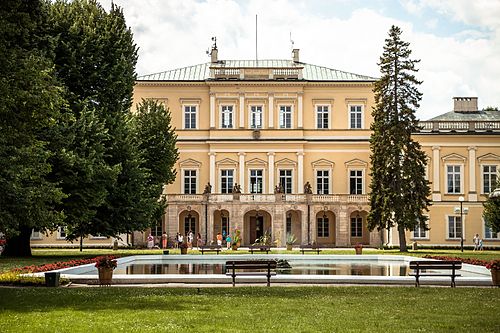
Puławy is a picturesque city located in the eastern part of Poland, within the Lublin Voivodeship. Situated on the banks of the Vistula River, it lies approximately 150 kilometers west of Lviv and about 60 kilometers northwest of the regional capital, Lublin. With a population of around 48,000 inhabitants, Puławy serves as an important administrative, cultural, and economic center in the region. The city is well connected through road infrastructure, including national roads and a railway line, which facilitate access to nearby cities and regions.
The history of Puławy dates back to the Middle Ages, but it flourished significantly in the 18th century when it became the residence of the influential Czartoryski family. This period saw the development of impressive architecture and gardens, notably the Czartoryski Palace, which was a cultural hub and the center of the Polish Enlightenment. Puławy's landscape is characterized by beautiful parks, with the Botanical Garden of the Czartoryski family being one of its highlights, housing a variety of plant species and offering a serene environment for visitors. Additionally, the city is known for its rich scientific and cultural heritage, emphasizing the legacy of the Polish noble class's contributions to the arts and sciences.
In modern times, Puławy has developed into a regional center for chemical production, particularly in the field of fertilizers, with the Zakłady Azotowe Puławy S.A. being one of the largest employers in the area. The city also boasts educational institutions, including schools and vocational training centers, promoting skills development among the local population. Puławy hosts various cultural events and festivals, which celebrate its historical roots and contemporary artistic endeavors, making it a vibrant place to live and visit. Overall, Puławy combines historical significance with modern industry and cultural richness, reflecting the diverse heritage of Poland.
Facts about Puławy
- Puławy is known for its rich history associated with the noble Czartoryski family, who significantly influenced Polish culture in the 18th century.
- The city is home to the Puławy Palace, a key example of neoclassical architecture, which was constructed in the late 18th century and was a center of enlightenment and culture.
- Puławy hosts the 'Puławy Science and Technology Park', which promotes innovation and development in various industries, distinguishing it as a hub for scientific research in Poland.
- The town is located on the banks of the Vistula River, making it an important historical trade route and fostering its development into a prominent center for commerce.
- Puławy is known for its botanical garden, which is part of the 'Park Puławski' and features unique plant species, making it a notable ecological attraction in the region.
- Every year, Puławy organizes the 'Puławy Festival of Science,' which showcases local research and promotes scientific education and community engagement.
- The city boasts a rich porcelain manufacturing history, with the famous 'Puławy Porcelain Factory' that has been producing elegant tableware since the 19th century.
- Puławy has unique archaeological sites indicative of early human settlement, with findings dating back to the Mesolithic period, offering insights into the region's prehistoric past.
- The city is renowned for its annual 'International Choir Festival,' attracting choirs from around the world, highlighting its cultural vibrancy and community spirit.
- Puławy is a strategic center for the chemical industry, with several significant manufacturing plants and research facilities, emphasizing its industrial importance in Poland.