Pyongyang, North Korea
- 3,222,000 people
- 17 places to visit
- 39.0392, 125.7625
Places to Visit (17)
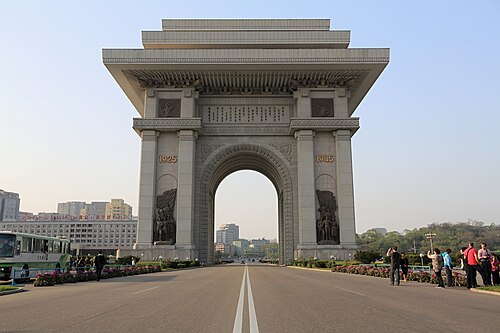
Pyongyang, the capital city of North Korea, is located on the Taedong River in the western part of the country. With a population of approximately 3 million, it is the largest city in North Korea and serves as its political, economic, and cultural center. The city's history dates back to ancient times, but it became the capital of North Korea in 1948, shortly after the country’s division following World War II. Pyongyang is characterized by its unique blend of socialist architecture and monuments, reflecting the ideological principles of the ruling Workers' Party and the legacy of its founder, Kim Il-sung. Notable landmarks include the Arch of Triumph, Kim Il-sung Square, and the Ryugyong Hotel, which is often referred to as the "monster" hotel due to its unfinished appearance.
The city has undergone significant transformation since the Korean War, with many of its structures built in accordance with the North Korean government's vision of a socialist utopia. Its urban landscape features vast boulevards, public parks, and grand squares, but it is also heavily segregated from the outside world, with strict regulations governing the lives of its citizens and little access for foreigners. Pyongyang is known for its mass events, such as the Arirang Festival, which showcases synchronized dance and gymnastics performed by thousands, celebrating the regime's ideology and heritage. While the city projects an image of stability and prosperity, underlying issues, such as food shortages and economic challenges, affect the broader North Korean populace. Despite these realities, Pyongyang remains a symbol of the country's identity and political authority, embodying both its historical narratives and ongoing ambitions.
Facts about Pyongyang
- Pyongyang is the capital and largest city of North Korea, serving as the political, economic, and cultural center of the country.
- The city is home to the iconic Kim Il-sung Square, where major events, parades, and celebrations occur, emphasizing its significance in North Korean state propaganda.
- Pyongyang features the Arch of Triumph, built in 1982 to commemorate the Korean resistance against Japanese colonial rule, which is larger than the one in Paris.
- The city has a unique architectural style characterized by grandiose monuments, socialist realism, and large, empty public spaces, setting it apart from other North Korean cities.
- Pyongyang is known for its extensive use of underground infrastructure, including a deep subway system that is one of the deepest in the world, with beautifully decorated stations.
- The city's Mass Games, known as Arirang, are an elaborate gymnastics and artistic festival that involves thousands of participants and is recognized by UNESCO for its cultural significance.
- Pyongyang has the world's largest stadium by capacity, the Rungrado 1st of May Stadium, which can hold over 114,000 spectators.
- The city hosts the People's Study Room, one of the largest libraries in North Korea, which contains millions of books and serves as a cultural hub for research and learning.
- Pyongyang's foreign relations efforts are visible through the presence of various embassies and the Pyongyang International Film Festival, attracting international attention.
- The city is also known for its monuments dedicated to the leaders of North Korea, including the Mansudae Grand Monument, featuring gigantic bronze statues of Kim Il-sung and Kim Jong-il.