Qazvin, Iran
- 333,635 people
- 6 places to visit
- 36.2795, 50.0046
Places to Visit (6)
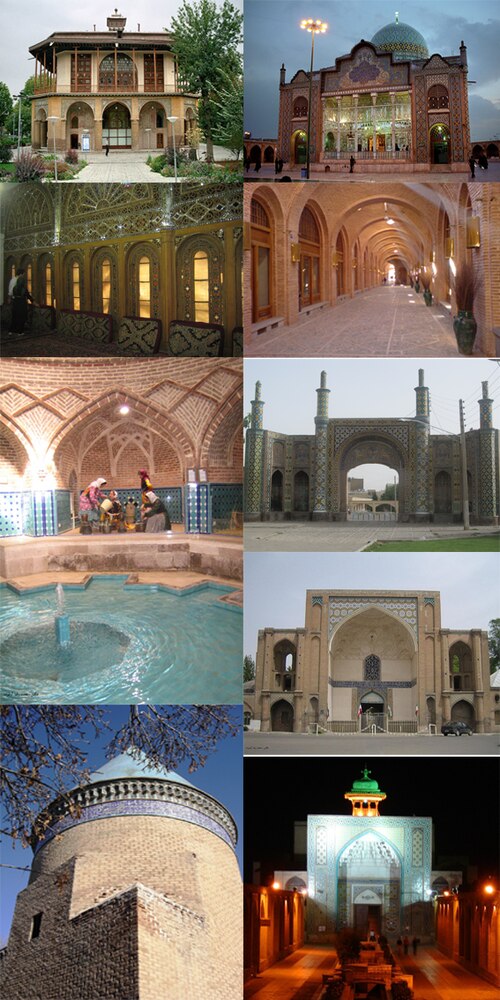
Qazvin is a city located in northwestern Iran, serving as the capital of Qazvin Province. Historically significant, Qazvin has roots that can be traced back over a thousand years, with evidence of human settlement in the region dating to ancient times. It became an important center during the Safavid dynasty in the 16th century, when it briefly served as the capital of Persia. The city is strategically situated at the crossroads of several key trade routes, enhancing its economic and political importance throughout its history. Qazvin’s diverse population includes a mix of ethnicities, predominantly Persians, contributing to a rich cultural landscape.
Architecturally, Qazvin is known for its historical monuments, many of which reflect the glory of Persian art and architecture. The Qazvin Grand Mosque, built in the 11th century, stands as one of the city’s most significant edifices, showcasing intricate tile work and design elements typical of Persian mosques. Another notable structure is the Alinazik Mosque, known for its stunning architecture and historical value. Besides its Islamic architecture, Qazvin is home to several palaces, caravansaries, and gardens, which highlight the city’s status during the Safavid era. The Qazvin Citadel, a remnant of its defensive past, attracts visitors interested in the city’s military history. In addition to historical sites, Qazvin is also noted for its vibrant bazaars, where local craftsmen sell handmade goods, food products, and traditional Persian sweets.
Today, Qazvin is a bustling urban center that balances its rich historical heritage with modern development. The city's economy is diverse, encompassing sectors such as agriculture, industry, and tourism. Qazvin is particularly known for its agricultural products, including fruits, grains, and traditional Persian saffron, which are cultivated in the surrounding fertile lands. The city's educational institutions and universities contribute to its role as a regional center for education and research. As a destination, Qazvin offers travelers a blend of history, culture, and hospitality, making it an intriguing stop for those exploring Iran's vast historical tapestry.
Facts about Qazvin
- Qazvin served as the capital of the Persian Empire during the Safavid dynasty in the 16th century, making it a significant historical center.
- The city is home to the Qazvin Gate, also known as the Alavi Gate, which is a remarkable architectural landmark dating back to the Safavid era.
- Qazvin houses the Jameh Mosque of Qazvin, known for its intricate tile work and historical significance, with sections dating back to the 11th century.
- The Qazvin Plain is famous for producing high-quality saffron, and the region's agriculture is well-known for various other crops including pistachios and grapes.
- Qazvin has a unique bazaar, the Qazvin Grand Bazaar, which is one of the oldest in Iran and reflects the traditional commercial architecture of the country.
- The city is recognized for the Qazvin Carpet, a distinctive type of Persian rug known for its intricate patterns and high-quality craftsmanship.
- Qazvin is notable for its historical caravanserais, such as the Sa'd al-Saltaneh Caravanserai, which showcases Iran's rich trade history and road travel in ancient times.
- It was the birthplace of several prominent Persian poets and scholars, including the famous poet 'Omar Khayyam,' although he is more commonly associated with Nishapur.
- Qazvin features several historic schools (madrasas), such as the Khan School, which underline the city's importance as a center for education and culture during the Safavid period.
- The city is renowned for its diverse culinary offerings, particularly its local sweets like Qazvin pastries, which are distinct to the region and popular across Iran.