Qinzhou, China
- 1,296,300 people
- 7 places to visit
- 21.9797, 108.6543
Places to Visit (7)
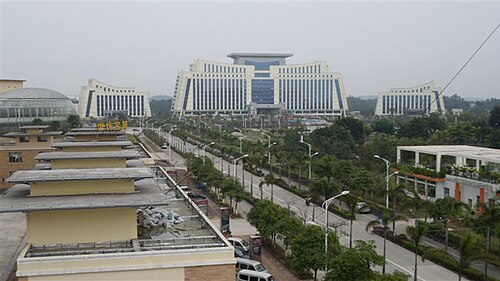
Qinzhou is a coastal city located in the Guangxi Zhuang Autonomous Region of southern China. Situated on the Beibu Gulf, Qinzhou serves as an essential port and transportation hub, with a strategic position that links inland cities to maritime trade routes. The city's history dates back to the Qin Dynasty (221-206 BC) when it was established as a significant administrative center. Over the centuries, Qinzhou has developed into a thriving urban area known for its rich cultural heritage and economic importance, highlighting its role in maritime commerce and trade.
The city's economy has traditionally been based on agriculture, aquaculture, and fishing, benefiting from its access to the sea. In recent years, Qinzhou has diversified its economy, promoting industries such as manufacturing, logistics, and tourism. The Qinzhou Port, one of the largest ports in Guangxi, plays a pivotal role in facilitating trade with Southeast Asia and beyond. In addition to its economic significance, Qinzhou is renowned for its natural beauty, featuring picturesque landscapes, mountains, and rivers, which attract both domestic and international tourists. The city is also home to several cultural sites, including ancient temples and historical relics, reflecting its long-standing history.
Qinzhou's population is diverse, comprising various ethnic groups, with the Zhuang people being the most prominent. This cultural diversity is celebrated in local festivals and traditions, enriching the city's social fabric. As Qinzhou continues to evolve, it aims to enhance its urban infrastructure and improve living conditions for its residents while preserving its cultural heritage and promoting sustainable development. The city's investment in modern amenities and its focus on environmental protection signal its ambition to become a vibrant and forward-looking metropolis in southern China.
Facts about Qinzhou
- Qinzhou is known for its unique maritime economy, leveraging its coastal position in the South China Sea, making it a vital hub for shipping and trade.
- The city features the famous Qinzhou Ancient City, which dates back over 2,000 years and showcases well-preserved historical architecture and cultural heritage.
- Qinzhou's location near the Beibu Gulf makes it an important center for agriculture, particularly in sugarcane and fruit production, contributing significantly to China's agricultural output.
- The city hosts the Qinzhou International Marine Economy Expo, which is a key event that attracts global maritime industry leaders and showcases advancements in marine technology.
- Qinzhou is celebrated for its rich biodiversity, particularly in its mangrove forests which are home to various rare species and provide essential ecological functions.
- The city also has a unique blend of cultures, influenced by both Han and Zhuang ethnic groups, which is reflected in its festivals, cuisine, and local customs.
- Qinzhou was designated as a 'National Historical and Cultural City' in 2001, recognizing its important role in Chinese history and preservation of cultural heritage.
- The local cuisine in Qinzhou features distinct flavors, particularly seafood dishes often prepared using traditional techniques, setting it apart from other regions in China.
- Qinzhou is strategically positioned as a part of the Guangxi Zhuang Autonomous Region, serving as a gateway for trade with Southeast Asia, enhancing its economic significance.
- The city is home to several key transportation infrastructure projects, including the Qinzhou Port, which is among the largest in the region and facilitates heavy cargo logistics.