Qo‘qon, Uzbekistan
- 259,700 people
- 1 places to visit
- 40.5341, 70.9309
Places to Visit (1)
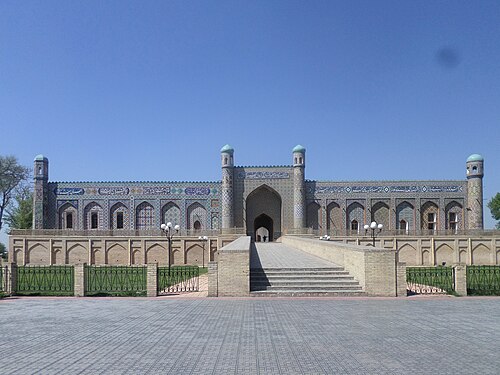
Qo‘qon, also known as Kokand, is a city located in the eastern part of Uzbekistan, within the Fergana Valley. It serves as the administrative center of the Qo‘qon District in the Fergana Region. Historically significant, Qo‘qon was an important cultural and economic hub along the Silk Road, facilitating trade and cultural exchanges between East and West. The city has a rich heritage, shaped by various influences, including Persian, Turkic, and Russian, particularly during the era of the Khanate of Kokand, which thrived from the 18th to the 19th centuries. The city is home to numerous historical sites, such as the Khudoyar Khan Palace, which showcases intricate architecture and ornate interiors, reflecting the glory of the Kokand Khanate.
Despite its historical importance, Qo‘qon is also a modern city, with a population that has grown to over 200,000 residents. The economy of Qo‘qon is diverse, encompassing agriculture, textile manufacturing, and trade. The fertile surroundings of the Fergana Valley contribute to agricultural production, with crops like cotton, fruits, and vegetables being prevalent. Qo‘qon is also known for its musical heritage, particularly traditional Uzbek music, and hosts various cultural events that celebrate its rich traditions. Through a combination of historical preservation and modern development, Qo‘qon stands as a vibrant example of Uzbekistan's cultural mosaic, blending its past with present progress in a rapidly changing world.
Facts about Qo‘qon
- Qo‘qon is known for its rich history as a major center of trade and culture during the Kokand Khanate, which existed from the 18th to the 19th century.
- The city is home to the Khudoyar Khan Palace, an architectural masterpiece built in the 19th century, which showcases the grandeur of the Kokand Khanate.
- Qo‘qon has a unique cultural heritage, particularly in crafts like silk weaving and traditional pottery, which are distinct to the Ferghana Valley region.
- The city features the Jami Mosque, constructed in the 19th century, which is renowned for its intricate tile work and majestic minarets, making it one of the largest mosques in Uzbekistan.
- Qo‘qon was a significant intellectual hub during the Islamic Golden Age, producing many scholars and poets, contributing to the region's heritage of literature and science.
- The city is famous for hosting the annual Festival of Qoqon, celebrating local culture, music, and crafts, attracting visitors from across Uzbekistan and beyond.
- Qo‘qon’s location in the Ferghana Valley provides it with a diverse landscape, distinguishing it from other cities in Uzbekistan that are predominantly desert or mountain regions.
- The city is known for the unique tradition of producing traditional 'Qo‘qon khon' suits, which are distinctively decorated and worn during cultural festivities.
- In contrast to other cities in Uzbekistan, Qo‘qon has retained several historic caravanserais, which highlight its importance as a stop along the Silk Road trade routes.
- The Qo‘qon railway station serves as an important transportation hub, facilitating connections between different regions of Uzbekistan and enhancing the city's role as a trade center.