Quedlinburg, Germany
- 22,814 people
- 18 places to visit
- 51.7921, 11.1414
Places to Visit (18)
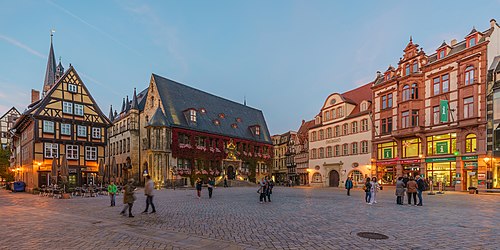
Quedlinburg is a charming town located in the Saxony-Anhalt region of Germany, known for its well-preserved medieval architecture and rich history. Situated at the foothills of the Harz mountains, Quedlinburg has been a significant settlement since the time of the Saxons. The town has a population of approximately 20,000 inhabitants and is recognized for its picturesque half-timbered houses, cobblestone streets, and the stunning St. Servatius Church. Quedlinburg's historical significance is highlighted by its status as a former royal residence and its role as a center of early German history during the Carolingian period.
One of the town's most notable features is its UNESCO World Heritage designation, awarded in 1994, which acknowledges its outstanding universal value in terms of cultural heritage. The historic district of Quedlinburg is filled with over 1,300 half-timbered buildings, some dating back to the 14th century, showcasing various architectural styles that reflect the town's development over the centuries. The town also hosts notable sites such as the Quedlinburg Castle, which offers panoramic views of the surrounding region and houses a museum displaying artifacts from the town's storied past. Another significant site is the Collegiate Church of St. Servatius, recognized for its Romanesque architecture and the tomb of Henry I, the first German king.
In addition to its historical and architectural significance, Quedlinburg is an attractive destination for tourists seeking a glimpse into Germany's medieval past. The town features a lively cultural scene, including local festivals, craft markets, and traditional German restaurants that serve regional cuisine. Visitors can explore the surrounding natural beauty of the Harz mountains, making Quedlinburg not only a historical gem but also a gateway to outdoor activities such as hiking and cycling. Today, Quedlinburg is a blend of historical charm and modern amenities, continuing to draw history enthusiasts and travelers alike, all eager to experience its unique heritage and idyllic setting.
Facts about Quedlinburg
- Quedlinburg is a UNESCO World Heritage Site, recognized for its well-preserved medieval architecture, including over 1,200 half-timbered houses.
- The town is known for its unique blend of Romanesque and Gothic architectural styles, particularly evident in the St. Servatius Church, which houses valuable artifacts like the Quedlinburg Codex.
- Quedlinburg was the first capital of the East Frankish Empire and played a significant role during the Holy Roman Empire.
- The town has a rich history tied to the Ottonian dynasty, as it served as a residence for several German kings and as the burial place for Emperors.
- Quedlinburg's famous market square, known as the 'Marktplatz,' features a striking blend of architectural styles and is surrounded by cafes and shops, making it a central social hub.
- Every year, Quedlinburg hosts the International Pumpkin Festival, attracting visitors with its unique displays and activities focused on pumpkins.
- The Quedlinburg Abbey, a former imperial abbey, was an important religious center and holds historical significance in the spread of Christianity in Germany.
- Quedlinburg is also known for its local wine production, particularly the cultivation of white wines, thanks to its location in the German wine region.
- The town is surrounded by the scenic Harz Mountains, making it a popular destination for hikers and nature lovers seeking outdoor activities.
- Quedlinburg has a vibrant arts scene, with numerous galleries and cultural events that showcase local artists and craftspeople.