Quetzaltenango, Guatemala
- 180,706 people
- 7 places to visit
- 14.8446, -91.5232
Places to Visit (7)
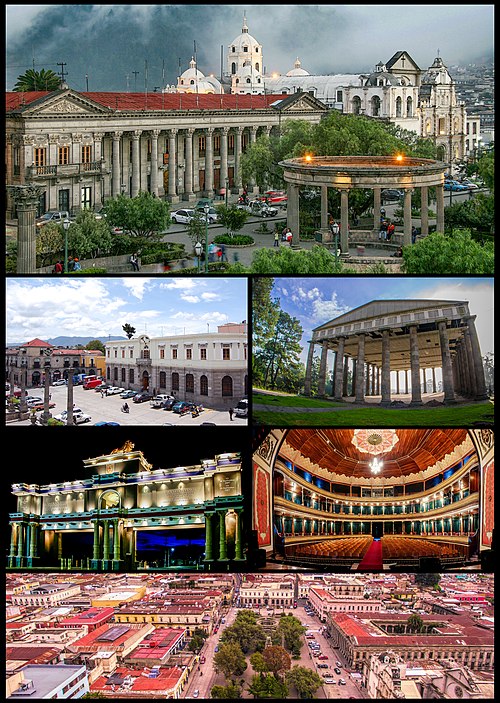
Quetzaltenango, often referred to by its indigenous name Xela, is the second-largest city in Guatemala, located in the western highlands of the country. Founded by the Spanish in the 16th century, Quetzaltenango has a rich cultural heritage, heavily influenced by both indigenous and colonial histories. The city sits at an elevation of approximately 2,330 meters (7,650 feet) above sea level, surrounded by a dramatic landscape of volcanoes, including the active Volcán de Santa María. The city's climate is temperate, with cool temperatures year-round, making it a popular destination for both tourists and expatriates seeking a more mild environment compared to the warmer lowland areas of Guatemala.
Quetzaltenango is well-known for its stunning architecture, which features numerous colonial-era buildings that reflect its historical significance. The Central Plaza, or Parque Central, is a focal point of the city, framed by the striking Cathedral of Quetzaltenango and numerous other historic constructions. The city also serves as a cultural hub, hosting various festivals and events, including the Feria de la Nueva Concepción in September, where traditional music, dance, and artistry showcase the indigenous heritage and community spirit. Additionally, Quetzaltenango is famous for its language schools, attracting students eager to learn Spanish amidst an authentic setting. The city is a gateway to several natural attractions, including hot springs and the surrounding highland landscapes that offer opportunities for hiking and adventure tourism, making it a key destination for travelers seeking to experience the rich culture and natural beauty of Guatemala.
Facts about Quetzaltenango
- Quetzaltenango, also known as Xela, is the second-largest city in Guatemala, known for its rich cultural heritage and vibrant indigenous communities.
- It is recognized for its distinctive colonial architecture, including the iconic 'Teatro Municipal' and the central park, which showcase neoclassical and baroque influences.
- Quetzaltenango is a major hub for language schools, attracting international students who come to learn Spanish and indigenous languages, making it a center for cultural exchange.
- The city is situated at an altitude of 2,333 meters (7,657 feet) above sea level, making it one of the highest cities in Central America, which contributes to its unique climate and environment.
- Quetzaltenango is known for its surrounding volcanoes, including the active Volcán Santa María, which offers popular hiking opportunities and stunning views of the region.
- The city hosts 'Fiesta de la Virgen de la Asunción,' a vibrant annual festival in August that attracts both locals and tourists with its traditional processions, music, and cultural events.
- Quetzaltenango has a significant indigenous population, with K'iche' and Mam being the predominant languages spoken alongside Spanish, reflecting the rich cultural diversity.
- The city's history dates back to pre-Columbian times when it was an important center for the Mam civilization, adding to its historical significance.
- Quetzaltenango is known for its artisan markets, offering unique handmade textiles, pottery, and traditional crafts that showcase the skills of local artisans.
- The city is also a gateway for exploring the highlands of Guatemala, serving as a starting point for visits to Lake Atitlán and other natural attractions.