Quezon City, Philippines
- 2,761,720 people
- 19 places to visit
- 14.676, 121.0437
Places to Visit (19)
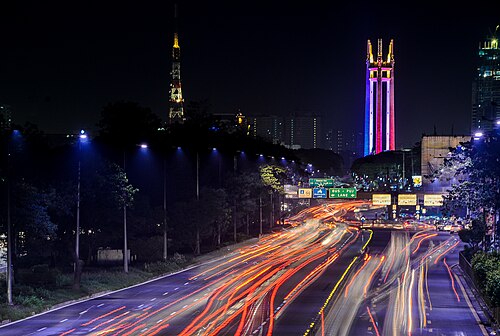
Quezon City, located in the northern part of Metro Manila in the Philippines, is one of the country’s most populous cities and serves as a major hub for education, government, and commerce. Established in 1939 and named after Manuel L. Quezon, the second President of the Philippines, the city was intended to be a planned capital to replace Manila. Quezon City features a diverse landscape that includes residential areas, commercial centers, and parks. It is home to significant institutions, including the University of the Philippines Diliman, Ateneo de Manila University, and numerous research organizations. The city plays a vital role in the educational landscape of the Philippines, attracting students from various regions.
The city is also notable for being the seat of government institutions, housing the House of Representatives and various government offices. Quezon City hosts several commercial centers, such as the popular SM City Quezon City and the TriNoma Mall, contributing to its vibrant economic activity. Additionally, it boasts a rich cultural scene with events, festivals, and attractions like the Quezon Memorial Circle and the Ninoy Aquino Parks and Wildlife Center. The city’s urban fabric is a blend of modern developments and historical sites, reflecting its evolution over the decades. Quezon City is not only significant for its administrative functions but also represents the contemporary lifestyle and challenges faced by urban centers in the Philippines. As the city continues to grow, it faces issues such as traffic congestion and infrastructure development, necessitating effective urban planning and sustainable practices to enhance the quality of life for its residents. Overall, Quezon City remains a vital area that mirrors the dynamic nature of the Philippines’ progress and development.
Facts about Quezon City
- Quezon City is the largest city in the Philippines by land area, covering approximately 166.2 square kilometers.
- It served as the capital of the Philippines from 1939 to 1976, making it one of the few cities in the country to hold that distinction.
- Quezon City is home to the iconic Quezon Memorial Circle, which features a monument dedicated to President Manuel L. Quezon, the city's founder.
- The city houses the Ninoy Aquino Parks and Wildlife Center, a notable urban wildlife sanctuary that promotes conservation in the heart of the city.
- Quezon City is known as the media capital of the Philippines, hosting numerous major television and radio networks, including ABS-CBN and GMA Network.
- The city boasts the Philippine Science Centrum, an interactive science museum that promotes science education for children and the youth.
- Quezon City is recognized for its annual LGBTQ+ Pride parade, one of the largest and most significant in the country, reflecting its inclusive culture.
- The city features the University of the Philippines Diliman, which is highly regarded as one of the top universities in the Philippines.
- Quezon City has the largest number of registered businesses among Philippine cities, showcasing its economic vitality and commercial activity.
- The city employs a unique urban planning model with extensive parks and green spaces, making it one of the greener urban areas in Metro Manila.