Quito, Ecuador
- 2,781,641 people
- 18 places to visit
- -0.1807, -78.4678
Places to Visit (18)
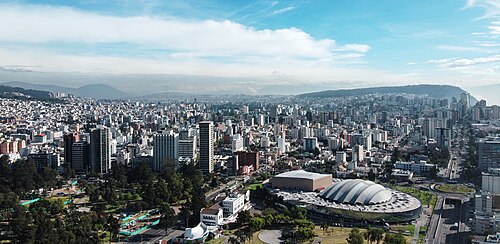
Quito, the capital city of Ecuador, is situated in the Andean foothills at an elevation of approximately 2,850 meters (9,350 feet) above sea level, making it one of the highest capital cities in the world. Founded in 1534 by Spanish conquistador Sebastián de Belalcázar on the ruins of an ancient Incan city, it has a rich historical legacy. The city's Old Town, known as "Centro Histórico," was recognized as a UNESCO World Heritage Site in 1978 for its well-preserved colonial architecture, including stunning examples of Baroque, Renaissance, and Moorish-style buildings. Key landmarks include the Basilica del Voto Nacional, the San Francisco Church, and the Plaza Grande, which is surrounded by significant government buildings and important historical sites.
Quito serves as a cultural and political center for the country, with a population of over 2.7 million inhabitants, making it the second-largest city in Ecuador after Guayaquil. The city is characterized by its diverse climate, influenced by its elevation and proximity to the equator, resulting in mild temperatures throughout the year. Quito is known for its vibrant culture, which blends Indigenous traditions with Spanish colonial influences, reflected in local festivals, gastronomy, and art. The city also plays host to several universities and cultural institutions, contributing to its reputation as a hub for education and the arts. Additionally, Quito's geographical location makes it an ideal starting point for exploring various natural attractions, including the nearby Andes mountains, volcanoes, and the famous Mindo cloud forest, attracting both tourists and researchers alike. The city's investment in infrastructure, including the recently developed Metro system, has improved transportation, contributing to its growth and modernization while preserving its historical heritage.
Facts about Quito
- Quito is the capital city of Ecuador and is situated at an altitude of approximately 2,850 meters (9,350 feet), making it one of the highest capital cities in the world.
- The historic center of Quito was designated a UNESCO World Heritage Site in 1978, recognized for its well-preserved colonial architecture and rich history.
- Quito is known for its striking baroque churches, particularly the Church of San Francisco and the Basilica del Voto Nacional, which are some of the most notable landmarks in the city.
- The city is located on the equator, and visitors can stand at both the Northern and Southern Hemispheres at the Mitad del Mundo (Middle of the World) monument.
- Quito hosts the annual Festival of Light (Fiesta de la Luz), where historic buildings are illuminated with artistic light displays, creating a unique cultural experience.
- The city's vibrant indigenous culture is showcased in its markets, such as Mercado Artesanal La Mariscal, where artisans sell traditional crafts and textiles.
- Quito has a panoramic view of several volcanoes, including Pichincha, which offers hiking opportunities and breathtaking views of the city and surrounding landscapes.
- Quito's La Ronda district is one of the oldest neighborhoods in the city, known for its narrow streets, colonial houses, and lively atmosphere filled with restaurants and artisan shops.
- The city is home to the 'TelefériQo', one of the highest cable cars in the world, providing access to the slopes of Pichincha and offering stunning views of the city.
- Ecuador's largest and oldest university, Universidad Central del Ecuador, is located in Quito, playing a significant role in the country’s education and cultural development.