Qujing, China
- 1,408,500 people
- 6 places to visit
- 25.49, 103.7963
Places to Visit (6)
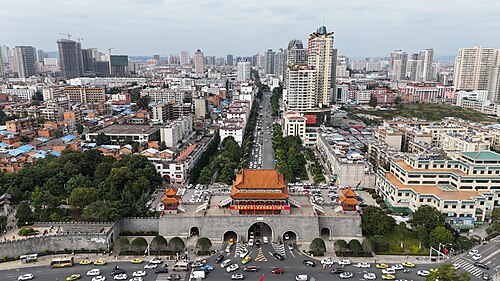
Qujing is a prominent city located in the central part of Yunnan Province, China, and acts as the administrative center of Qujing Prefecture. It lies approximately 220 kilometers southeast of the provincial capital, Kunming, and covers an area of about 29,000 square kilometers. Qujing is notable for its diverse cultures, rich history, and significant economic contributions, primarily driven by its abundant natural resources. The city is surrounded by stunning landscapes, including mountains and plateau areas, contributing to its picturesque environment and attracting tourism.
Historically, Qujing has been instrumental in various trade routes, especially since ancient times when it was part of the Kingdom of Nanzhao, which flourished during the 8th to 10th centuries. It has long served as a crucial transportation hub, connecting different regions of Yunnan and facilitating trade and cultural exchange. Over the years, Qujing has developed into a major industrial center, focusing on sectors like coal mining, metallurgy, and chemical production. The presence of rich mineral resources has spurred considerable industrial activities, making Qujing one of China’s significant coal-producing cities. Additionally, agriculture remains an essential part of Qujing's economy, with the cultivation of crops such as tobacco, vegetables, and rice contributing to the local livelihood.
Culturally, Qujing is home to a variety of ethnic groups, including the Hui, Yi, and Bai people, which enriches its cultural tapestry with diverse traditions, festivals, and culinary practices. The city is known for its vibrant local markets, where visitors can explore traditional crafts and taste authentic regional dishes. With several nearby natural attractions such as the scenic Fuxian Lake and various national parks, Qujing has also become a popular destination for outdoor enthusiasts. Efforts are underway to enhance its tourism infrastructure, promoting both eco-tourism and cultural experiences while preserving the rich heritage of the region. As China continues to experience rapid urbanization and development, Qujing stands at the crossroads of tradition and modernity, reflecting the dynamic growth of cities in the country.
Facts about Qujing
- Qujing is known as the 'City of Sky' due to its high elevation, sitting at about 1,750 meters (5,740 feet) above sea level, making it one of the highest cities in Yunnan province.
- The city is situated at the junction of several important transport routes, which historically made it a significant trade hub in southern China.
- Qujing is home to the well-preserved Qilin Ancient Town, showcasing the traditional architecture and culture of the region, with a history dating back over 1,000 years.
- The city features the stunning Fuxian Lake, one of the deepest freshwater lakes in China, known for its crystal-clear waters and biodiversity.
- Qujing is famous for the Qujing Miao and Yi ethnic festivals, which celebrate the rich cultural heritage and traditions of these minority groups.
- It served as a strategic military stronghold during the Qing Dynasty, with numerous ancient fortifications still visible around the city.
- The Qujing Geological Park is recognized for its unique karst landscapes and rich fossil deposits, attracting geologists and tourists alike.
- Qujing is associated with the 'Three Rivers' culture, where the convergence of the Wu River, the Nanpan River, and the Beipan River creates a diverse ecological and cultural landscape.
- The city has a thriving mining industry, particularly known for its rich deposits of coal and other minerals, contributing significantly to Yunnan's economy.
- Qujing hosts the annual International Sheepdog Championship, drawing competitors from around the world to showcase herding skills and promote rural agricultural practices.