Raleigh NC, United States
- 451,066 people
- 17 places to visit
- 35.7796, -78.6382
Places to Visit (17)
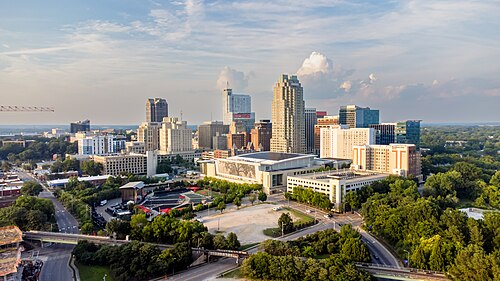
Raleigh, the capital city of North Carolina, serves as a key hub in the state's Research Triangle region, which includes neighboring cities Durham and Chapel Hill. Founded in 1792, Raleigh was specifically chosen to be the state capital due to its central location, and its name honors Sir Walter Raleigh, the English explorer associated with the Roanoke Colony. The city's planned layout by architects William Christmas and John Haywood features wide streets and expansive parks, embodying its vision of a sustainable and accessible urban environment. Today, Raleigh is known for its rich history, diverse culture, and vibrant economy powered by technology, healthcare, and education.
Raleigh boasts a population of over 474,000 residents, making it the second-largest city in North Carolina. The city is home to several prestigious institutions, including North Carolina State University, which significantly contributes to the local economy and culture. The region has gained a reputation as a global leader in research and innovation, housing numerous biotechnology and information technology companies. Additionally, Raleigh is celebrated for its cultural amenities, such as the North Carolina Museum of Natural Sciences, the North Carolina Museum of Art, and a lively music scene that hosts a variety of events year-round. The city is also recognized for its extensive green spaces, with parks such as Pullen Park and William B. Umstead State Park offering recreational opportunities that enrich the quality of life for its residents.
Overall, Raleigh exemplifies a blend of historical significance and modern advancement, making it an attractive destination for families, students, and professionals alike. With its strong economy, thriving educational institutions, and commitment to sustainability, Raleigh continues to grow and evolve while maintaining its southern charm and vibrant community spirit.
Facts about Raleigh
- Raleigh is known as the 'City of Oaks' due to the large number of oak trees lining its streets and parks.
- Raleigh is one of the few cities in the United States specifically planned and built to be a state capital, established in 1792.
- Raleigh is home to the North Carolina State Capitol, a National Historic Landmark built between 1833 and 1840, showcasing Greek Revival architecture.
- The city is part of the Research Triangle, along with Durham and Chapel Hill, which is renowned for its high concentration of tech companies and research institutions.
- Raleigh hosts the annual Hopscotch Music Festival, which is known for its diverse lineup and has gained national recognition since its inception in 2010.
- Raleigh has consistently ranked as one of the best places to live in the United States due to its quality of life, job growth, and education facilities.
- The city is home to the North Carolina Museum of Natural Sciences, the largest natural history museum in the Southeast, offering free admission and extensive exhibits.
- Raleigh is part of the Triangle area, which has a high concentration of universities, including North Carolina State University, Duke University, and the University of North Carolina at Chapel Hill.
- The city has a vibrant arts scene, with the Raleigh Arts Festival and First Friday, a monthly event showcasing local artists, musicians, and galleries.
- Raleigh's historic district features the Sir Walter Raleigh Hotel, which played a significant role in the city's development during the 20th century and is recognized for its architectural significance.