Râmnicu Sărat, Romania
- 38,526 people
- 9 places to visit
- 45.3865, 27.0462
Places to Visit (9)
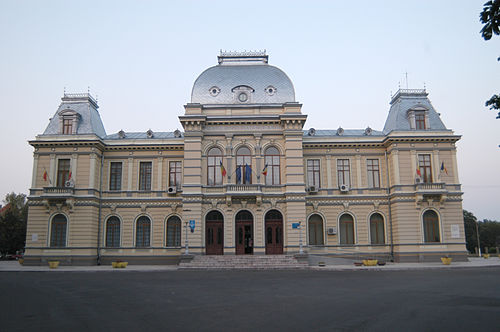
Râmnicu Sărat is a city located in Buzău County, Romania, situated in the historical region of Walachia. The city lies on the banks of the Râmnic River, approximately 94 kilometers northeast of Bucharest, the capital of Romania. With a population of around 30,000 residents, Râmnicu Sărat is an important cultural and administrative center within the region. The city is notable for its picturesque landscapes, characterized by rolling hills and green fields, making it an appealing destination for visitors seeking a blend of urban and rural experiences.
Historical records indicate that Râmnicu Sărat was first mentioned in documents dating back to the 14th century, reflecting its long-standing prominence in the region. Throughout history, it played a crucial role as a commercial hub due to its strategic location along routes connecting various parts of Romania. The city's architecture reflects its rich history, with several notable landmarks, including the Râmnicu Sărat Monastery, built in the early 18th century, which serves as an enduring symbol of the local Orthodox Christian heritage. Additionally, the city is home to the Memorial House of the poet George Coșbuc, a significant figure in Romanian literature, further highlighting its cultural importance.
In contemporary times, Râmnicu Sărat has evolved into a center of economic activity, with sectors such as manufacturing, agriculture, and services contributing to its local economy. The city hosts various educational institutions, including high schools and vocational training centers, which serve the surrounding communities. The local administration focuses on improving infrastructure and fostering development, making Râmnicu Sărat a growing urban center while still preserving its historical character. Efforts to promote tourism are evident in the numerous events and festivals celebrating local traditions and culture, attracting visitors interested in exploring Romania's historical sites and natural beauty. As Râmnicu Sărat continues to develop, it seeks to balance modernization with the preservation of its historical and cultural heritage, making it a unique destination in Romania.
Facts about Râmnicu Sărat
- Râmnicu Sărat is historically significant for its role in the 19th-century unification movement in Romania, being a site of various political and cultural activities.
- The city is home to the Râmnicu Sărat Fortress, a 16th-century structure that served as a defense against Ottoman invasions, unique for its blend of architectural styles.
- Râmnicu Sărat hosts the annual Festival of Traditional Crafts, which celebrates and preserves local folk arts and crafts, attracting artisans from all over Romania.
- The city's geography is notable, located at the confluence of the Râmnic and Sărat rivers, providing it with a lush landscape that is atypical for many Romanian cities.
- Râmnicu Sărat is known for its unique 'Râmnic Peasant's House', showcasing traditional rural architecture that reflects the region's cultural heritage.
- The city was a significant center for the Romanian Orthodox Church and has several important churches, such as the Church of the Holy Archangels, known for its intricate frescoes.
- During World War II, Râmnicu Sărat was a notable resistance center, with local inhabitants playing a crucial role in opposing fascist forces, distinguishing it from other cities.
- The Râmnicu Sărat Memorial of the Victims of Communism honors those who suffered under the communist regime, making it a site of historical reflection in contrast to other towns.
- Râmnicu Sărat is famous for its mineral springs, particularly the salubrious waters at the nearby Sărata-Monteoru resort, which are less known compared to other spa towns in Romania.
- The city has a reputation for its vibrant educational institutions, including the 'George Coșbuc' National College, contributing to a strong emphasis on education and culture within the community.