Rānipet, India
- 264,330 people
- 11 places to visit
- 12.9487, 79.319
Places to Visit (11)
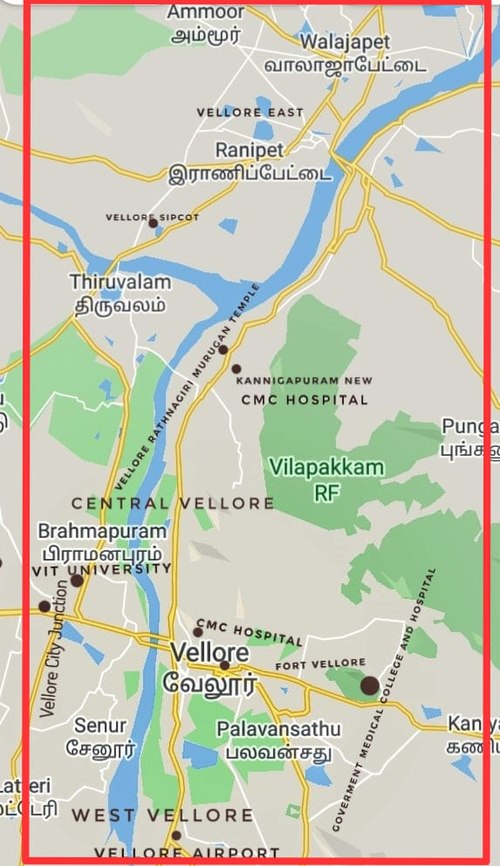
Rānipet is a city located in the state of Tamil Nadu, India, and serves as the administrative headquarters of the Rānipet district. It is situated approximately 70 kilometers west of Chennai, the state capital, and is accessible via major roadways and rail networks. Originally part of the Kanchipuram district, Rānipet was established as a standalone district in 2019. The city is strategically located near Vellore, which is well-known for its historical significance and institutions, making Rānipet a convenient residential area for those working or studying in these nearby cities.
Historically, Rānipet gained prominence during the late 19th to mid-20th centuries when it emerged as an important center for the leather and textile industries, benefiting from its proximity to the region's abundant resources. The town has a diverse industrial base, including manufacturing and small-scale industries, contributing to its economic growth. Rānipet is often referred to as a "hub of the leather industry" in Tamil Nadu, with numerous tanneries and leather goods manufacturing units operating in the vicinity. This has not only fortified the local economy but also provided employment opportunities to a large number of residents.
Culturally, Rānipet embodies a blend of traditional Tamil customs and an emerging modern lifestyle. The city hosts various temples and festivals that reflect the rich heritage of the region. Important temples, such as the Tiruvengadamudaiyar Temple, attract devotees from across the state. As a growing urban center, Rānipet has seen infrastructural development, including educational institutions, healthcare facilities, and recreational areas, along with a burgeoning real estate market. The landscape is evolving rapidly, modernizing while still retaining its historical essence, making Rānipet a notable example of a city at the crossroads of tradition and progress.
Facts about Rānipet
- Rānipet is known for its historical significance and was established during the British colonial era, serving as a hub for the leather industry.
- The Rānipet Municipality was established in 1866, making it one of the older municipalities in Tamil Nadu.
- The city is famous for its large-scale production of leather goods, particularly footwear, and is often referred to as the 'Leather City of India'.
- Rānipet is home to the iconic 'Krishna Devaraya Fort', which offers insights into the architectural styles of ancient Indian fortifications.
- The annual Rānipet Injil (a local harvest festival) showcases traditional Tamil culture through folk music, dance, and local cuisine.
- Rānipet serves as a key industrial town in Tamil Nadu, contributing significantly to the state’s economy with its various small-scale industries.
- The city is strategically located near major transport hubs, including the Chennai-Bangalore National Highway, enhancing its connectivity.
- Rānipet has notable educational institutions, including engineering and arts colleges, attracting students from across the region.
- The city's proximity to Vellore, home to the prestigious Vellore Institute of Technology (VIT), has led to a rise in educational and technological developments in the area.
- Rānipet is also known for its diverse local cuisine, influencing both street food and traditional Tamil dishes unique to the region.