Rathenow, Germany
- 27,115 people
- 10 places to visit
- 52.6045, 12.3371
Places to Visit (10)
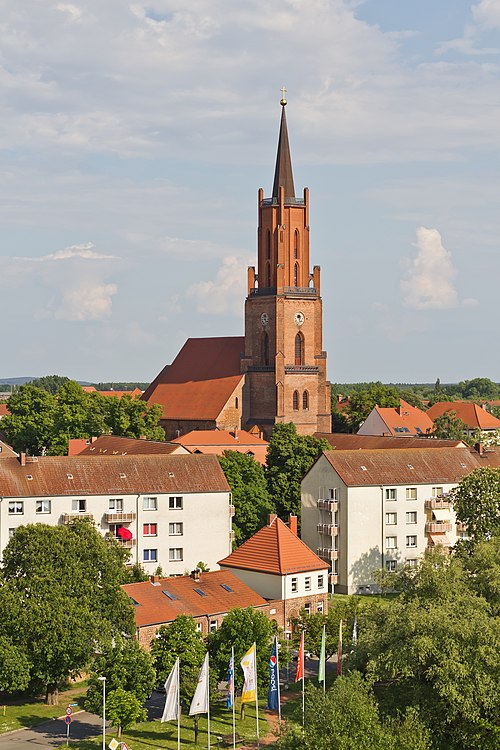
Rathenow is a city located in the state of Brandenburg, Germany, situated about 70 kilometers west of Berlin. Known for its picturesque setting along the Havel River, Rathenow has a rich historical background dating back to the 13th century when it was first mentioned in official documents. Its strategic location made it an essential trade route, contributing to its development. Over the years, Rathenow evolved from a small town into a vibrant city, particularly during the 19th century, when the industrial revolution brought significant economic changes. The city is famed for its glass production, which began in the late 18th century, leading to the establishment of several glassworks that played a crucial role in the local economy. Rathenow’s innovation in optics eventually earned it the title of “City of Optics.”
The city's architectural landscape reflects its storied past, featuring a mix of historical buildings and modern developments. Notable landmarks include the St. Mary’s Church, with its impressive tower, and the Rathenow Windmill, a traditional post mill that serves as an example of local craftsmanship. Rathenow is also home to the Museum of Optical Devices, dedicated to the city's historical significance in the field of optics and glass production. Besides its industrial heritage, Rathenow is surrounded by beautiful natural landscapes, offering numerous opportunities for outdoor activities such as hiking and cycling along the Havel riverbanks. The city's commitment to preserving its historical sites alongside fostering modern growth makes Rathenow an interesting blend of tradition and innovation.
Rathenow is well-connected through various transportation routes, including the Bundesstraße 102 and railway services that link it to regional centers, including Berlin and Magdeburg. As a city with a population of around 24,000 residents, Rathenow has an active community life characterized by local festivals, cultural events, and a focus on education, with several schools and institutions contributing to its social vibrancy. The local economy has diversified over the years, now encompassing not just glass and optics but also services, retail, and small-scale manufacturing. With its appealing combination of rich history, cultural heritage, and natural beauty, Rathenow continues to attract visitors and residents alike, reflecting the dynamic spirit of modern German towns.
Facts about Rathenow
- Rathenow is known as the 'City of Glass' due to its significant glass production history, particularly in the 19th century.
- The city is home to the first glass factory established in 1870, which laid the foundations for Rathenow's glass industry.
- Rathenow features the oldest remaining glassworks in Germany, which still operates and produces handcrafted glass products.
- The city is located along the Havel River and boasts a picturesque landscape with historical architecture and natural beauty.
- Rathenow is famous for its unique optical tools production, being one of the leading centers of optical glass manufacturing.
- The Rathenower 'Optical Glass School' (Optische Glas Schule) has trained many professionals in the field of optics, contributing to advancements in the industry.
- Rathenow was heavily affected by World War II, and many historical buildings were destroyed, leading to significant post-war reconstruction.
- Every year, Rathenow hosts the 'Glass Art Festival' (Glaskunst Festival), which celebrates the city’s rich glass-making heritage with exhibitions and workshops.
- The city is linked to the famous German Romantic painter Caspar David Friedrich, as he frequently visited and drew inspiration from the area's landscapes.
- Rathenow is part of the Havelland district and provides access to a variety of outdoor recreational activities including hiking and cycling along the Havel river.