Recife, Brazil
- 1,653,461 people
- 17 places to visit
- -8.0578, -34.8829
Places to Visit (17)
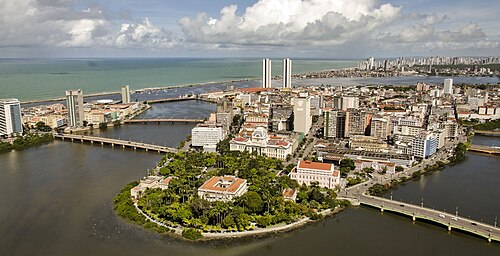
Recife is the capital of the state of Pernambuco in northeastern Brazil, renowned for its rich cultural heritage, vibrant music scene, and distinctive architecture. Established in the early 16th century by Portuguese colonists, Recife evolved into a significant port city, often referred to as the "Venice of Brazil" due to its extensive network of canals and bridges. Its historical importance surged during the Dutch occupation in the 17th century, particularly under Johan Maurits of Nassau-Siegen, who fostered cultural development and urban planning. Today, the city showcases a blend of colonial, baroque, and contemporary architecture, with notable landmarks including the historic center, which features the impressive Palácio do Campo das Princesas and the iconic Kahal Zur Israel Synagogue, the first synagogue in the Americas.
Recife is also known for its vibrant cultural festivals, particularly the annual Carnival, which attracts thousands of visitors. The city is a hub for traditional Brazilian music genres such as frevo and maracatu, reflecting its African and Indigenous influences. The local gastronomy is similarly diverse, offering dishes such as bolo de rolo (a rolled cake with guava paste) and various seafood delicacies. Recife is strategically located near stunning beaches, including Porto de Galinhas and Boa Viagem, which enhance its appeal as a tourist destination. Moreover, the city is home to several universities, contributing to its status as an educational center in northeastern Brazil. As a crossroads of different cultures, Recife continues to thrive as a vibrant city full of history, art, and a unique sense of community, making it a significant part of Brazil's national identity.
Facts about Recife
- Recife is known as the 'Venice of Brazil' because of its extensive network of canals and bridges, making it one of the few cities in the world with a similar layout.
- The city is home to the historic neighborhood of Olinda, a UNESCO World Heritage site, known for its colonial architecture, vibrant Carnival celebrations, and rich cultural heritage.
- Recife is recognized for its contributions to Brazilian culture, particularly in music and dance, with the development of genres like Frevo and Maracatu stemming from this region.
- The city has a unique biannual festival called 'Galo da Madrugada', which is considered the largest carnival block in the world, attracting over 2 million people each year.
- Recife has one of the most important cultural institutions in Brazil, the Fundação Joaquim Nabuco, which promotes research and education in history and the arts.
- The city's famous Boa Viagem beach features natural coral reefs, making it one of the safest and most picturesque urban beaches in Brazil.
- Recife is the epicenter of Pernambuco's rich culinary scene, famous for dishes like 'bolo de rolo' (a rolled sponge cake) and 'tapioca' (a starch-based flatbread).
- It is one of Brazil's oldest cities, founded in 1537, with a complex history that includes Dutch colonization in the 17th century, which has left a distinct mark on its architecture.
- The city's Port of Recife is a vital commercial hub and is one of the oldest ports in Brazil, playing a significant role in the regional economy.
- Recife is home to the unique art of 'cordel literature', a popular folk art that combines poetry, illustration, and storytelling, which is distinct to the Northeastern region of Brazil.