Regensburg, Germany
- 129,151 people
- 16 places to visit
- 49.0134, 12.1016
Places to Visit (16)
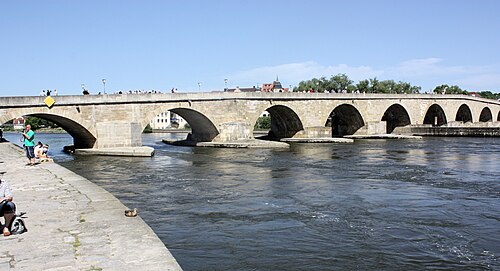
Regensburg, located in Bavaria, Germany, is one of the country’s oldest cities, with a rich history that dates back to Roman times. Founded around 179 AD as the Roman fort of Castra Regina, it served as a significant military and trade settlement. The city is strategically situated at the confluence of the Danube, Naab, and Regen rivers, which has contributed to its historical importance as a trade hub. By the Middle Ages, Regensburg had developed into a prosperous center of commerce and culture, officially becoming a Free Imperial City in the 13th century. This status allowed it to flourish independently, serving as the meeting point of the German Diet and hosting important political gatherings.
Regensburg is renowned for its well-preserved medieval architecture, which earned it UNESCO World Heritage status in 2006. Notable landmarks include the Stone Bridge, completed in 1146, which spans the Danube and was a remarkable engineering feat of its time. The city’s Old Town features a mix of Gothic, Renaissance, and Baroque buildings, with exquisite structures such as the Regensburg Cathedral (Dom St. Peter) and the Old City Hall. Additionally, the Porta Praetoria, remnants of Roman gates, are a testament to the city’s ancient origins. The vibrant atmosphere of Regensburg is enhanced by its various festivals, including the Regensburg Christmas Market, one of the oldest in Germany, and the annual Danube Festival celebrating the region's cultural diversity.
Regensburg today is a blend of history and modernity, serving as a center of education and commerce. The University of Regensburg, established in 1962, contributes to the city's youthful energy and intellectual vibrancy. The local economy is diversified, with industries including information technology, education, and manufacturing. As a picturesque city with a thriving cultural scene, Regensburg attracts tourists from around the world, offering a unique experience that combines its historical significance with contemporary amenities. The city's numerous cafes, shops, and breweries, together with scenic views along the rivers, create an inviting atmosphere for both residents and visitors to enjoy.
Facts about Regensburg
- Regensburg is home to the largest preserved medieval old town in Germany, which is a UNESCO World Heritage Site.
- The Stone Bridge in Regensburg, completed in 1146, is one of the oldest and most significant stone bridges in Europe, connecting the old town to the newer parts of the city.
- Regensburg was an important political and economic center during the Holy Roman Empire and hosted the Imperial Diet for over 600 years.
- The city's historical architecture includes over 1,500 listed buildings, showcasing a rich blend of Roman, Gothic, and Baroque styles.
- Regensburg is known for its large number of breweries, with some of the oldest breweries in Germany, contributing to its reputation as a beer city.
- The Regensburg Cathedral (Dom St. Peter) is a prime example of Gothic architecture and features the largest free-swinging church bell in the world.
- The city is famous for the Walhalla memorial, a hall of fame overlooking the Danube River, which honors important figures in German history.
- Regensburg's location at the confluence of the Danube, Naab, and Regen rivers has historically made it a vital trade hub, influencing its development.
- The Domspatzen (Regensburg Cathedral Singers) is one of the oldest boys' choirs in the world, dating back to the 10th century, and continues to perform today.
- Regensburg is an educational hub and hosts several universities, including the University of Regensburg, which was established in 1962 and is known for its diverse range of academic programs.