Rieti, Italy
- 39,068 people
- 12 places to visit
- 42.4046, 12.8568
Places to Visit (12)
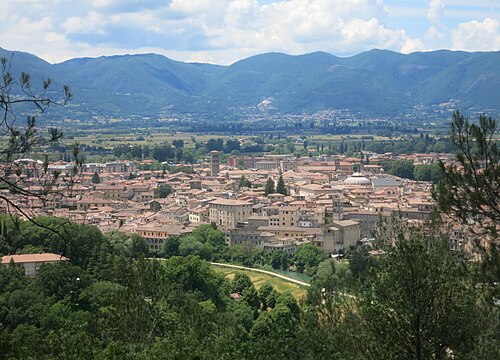
Rieti is a historic city located in the central Italian region of Lazio, approximately 80 kilometers northeast of Rome. Known for its picturesque landscapes and rich history, Rieti is situated in the fertile Valle Reatina, surrounded by the Sabine Mountains and near the confluence of the rivers Velino and Salto. The city’s origins trace back to ancient times, with settlements in the area believed to exist since the 8th century BC. Rieti was originally a town of the Sabines and later became a significant Roman municipality. This rich history is reflected in its architecture, with remnants of Roman buildings, medieval structures, and Renaissance palaces scattered throughout the city.
Rieti is culturally significant and is often referred to as the "threshold of Italy" due to its geographic position that is nearly equidistant from the coasts of the Tyrrhenian and Adriatic seas. The city is characterized by its historic center, which boasts narrow streets, charming squares, and important religious sites. Noteworthy landmarks include the Cathedral of Santa Maria Assunta, which showcases Renaissance architecture, and the nearby Basilica of Sant'Antonio, an important pilgrimage site. Additionally, the city is home to the ancient Roman Theatre and the Medieval fortress known as the Rocca di Rieti. Rieti hosts various cultural events throughout the year and is a starting point for discovering the beautiful surrounding landscapes, including the Sirente-Velino Regional Park.
Tourism also plays a pivotal role in Rieti's economy, attracting visitors who seek to explore its rich history and natural beauty. The city’s strategic location makes it a popular base for hiking, rock climbing, and outdoor pursuits in the surrounding Apennines. Cuisine in Rieti is an integral part of its cultural identity, featuring traditional dishes made with local ingredients, often influenced by its agricultural heritage. Events like the annual "Festa della Tonna" celebrate local customs and history, further showcasing Rieti’s vibrant community spirit. Overall, Rieti embodies a blend of historical significance, unique culture, and natural beauty, making it an appealing destination in Italy.
Facts about Rieti
- Rieti is often referred to as the 'umbilicus of Italy' because it is located near the geographic center of the Italian peninsula.
- The city is home to the ancient Roman ruins of a theater, dating back to the 1st century BC, which is one of the best-preserved in Italy.
- Rieti has a rich medieval history, evident in its well-preserved medieval walls and the architecture of the Duomo, which dates back to the 13th century.
- The nearby Terminillo mountain is a popular destination for skiing and hiking, making Rieti a unique blend of cultural and outdoor tourist appeal.
- Rieti is famous for its traditional festivals, including the 'Rieti Festival' which celebrates local folklore and the 'Sagra della Polenta' focused on regional cuisine.
- The city is also known for being a center of the Italian llama breeding industry and hosts events celebrating this unique aspect of agriculture.
- Rieti has a significant religious heritage with numerous churches, including the Basilica di Santa Maria Assunta, which features stunning frescoes.
- The Rieti Valley is renowned for its production of high-quality olive oil and local wines, distinguishing it from other regions of Italy.
- Rieti was the birthplace of the Italian poet Giovanni Pascoli, who was influential in the literary scene in the late 19th and early 20th centuries.
- Rieti's annual 'Festival of the Small World' celebrates global cultures through music, dance, and art, highlighting the city's commitment to cultural diversity.