Romans-sur-Isère, France
- 35,002 people
- 8 places to visit
- 45.0442, 5.0527
Places to Visit (8)
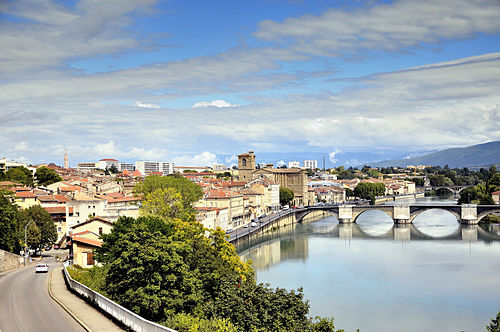
Romans-sur-Isère is a commune in the Drôme department in southeastern France, located on the banks of the Isère River. With a population of approximately 33,000 residents, it is part of the Auvergne-Rhône-Alpes region and lies about 20 kilometers northeast of Valence. Romans-sur-Isère is known for its rich historical background, dating back to Gallo-Roman times when it was called "Vogüé." The town has a blend of modern and medieval architecture, with remnants of its ancient past visible in its structures, such as the former Roman forum and the medieval streets that wind through the city.
The city is famous for its shoe manufacturing industry, which flourished in the 19th and early 20th centuries, earning it the nickname "the shoe capital of the world." While this prominence has waned in recent decades, Romans-sur-Isère continues to be a hub for creative arts and crafts associated with footwear. Additionally, the town embraces a vibrant cultural scene, illustrated through various annual events, festivals, and markets. Notably, the local gastronomy is exquisite, drawing upon the region's agricultural products and traditional recipes, making dining an integral part of life in Romans-sur-Isère. Moreover, the town is positioned close to scenic landscapes, including the Vercors Regional Natural Park, attracting visitors who appreciate outdoor activities such as hiking and cycling.
Tourism also plays a role in the local economy, with several attractions drawing both domestic and international visitors. Key sites include the Collegiate Church of Saint-Bernard, notable for its impressive architecture and history, as well as the Museum of International Shoe, showcasing the evolution of footwear and the town's historical significance. Romans-sur-Isère's strategic location along major transport routes makes it accessible and appealing for exploration, offering a blend of historical charm and modern conveniences in a picturesque setting.
Facts about Romans-sur-Isère
- Romans-sur-Isère is renowned for its centuries-old tradition of leather working, particularly in the production of shoes, making it a significant center in the French footwear industry.
- The city is home to the famous 'Bâtie de Romans', a medieval castle that served as a stronghold for the Counts of Ayo, showcasing rich architectural history.
- Romans-sur-Isère hosts the International Shoe Fair, attracting global exhibitors and showcasing the latest innovations in footwear design.
- The city features a unique blend of history and art, with numerous public squares adorned with vibrant street art and sculptures, making it a living gallery.
- Romans-sur-Isère is adjacent to the historic town of Saint-Paul-Trois-Châteaux, which has significant archaeological sites, including Roman ruins.
- The city's famous church, the Collegiate Church of Saint-Bernard, dates back to the 12th century and is an excellent example of Romanesque architecture.
- Every summer, Romans-sur-Isère celebrates the Festival of Music, which features performances from local artists and musicians, fostering a strong sense of community.
- The city has a rich literary history, having been the birthplace of several notable French writers, contributing to its cultural heritage.
- Romans-sur-Isère has been awarded the 'Ville d'Art et d'Histoire' label, recognizing its commitment to preserving history and promoting cultural tourism.
- The region around Romans-sur-Isère is famous for its scenic vineyards, producing some notable wines of the Côtes du Rhône appellation.