Rosario, Argentina
- 948,312 people
- 17 places to visit
- -32.9587, -60.6931
Places to Visit (17)
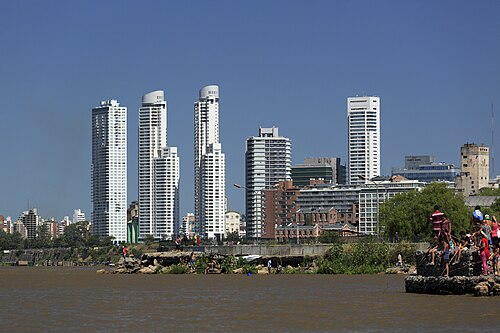
Rosario is a vibrant city located in the province of Santa Fe, Argentina, along the western shore of the Paraná River. As the third-largest city in the country, it plays a crucial role in Argentina's economic, cultural, and educational landscape. With a population of approximately 1.2 million people in the metropolitan area, Rosario serves as a major urban and commercial center. The city is well-connected by rail, highways, and an international airport, which facilitates trade and travel. Its strategic location has historically made it a significant hub for agribusiness, with an emphasis on the export of soybeans and other agricultural products, contributing notably to the national economy.
Rosario is not only an economic powerhouse but also a rich cultural center. The city's architecture showcases a mix of contemporary and historical styles, including neo-Gothic structures and elegant plazas, reflecting its European influences. This colorful urban landscape is home to a thriving arts scene, with theaters, museums, and galleries that attract both locals and tourists alike. Rosario is also known for its active nightlife and diverse culinary offerings, celebrating local cuisine and international flavors. Additionally, the city has produced several prominent cultural figures, including the famed revolutionary Ernesto "Che" Guevara, and is recognized as the birthplace of the Argentine flag, with a monument dedicated to its creation located at the National Flag Memorial.
In terms of education, Rosario boasts several universities and institutions that contribute to its reputation as an academic hub. The National University of Rosario and the Rosario Institute of Technology are among the leading institutions in the region, attracting students from across the country and beyond. The city's demographic diversity, combined with its robust educational framework, fosters a dynamic atmosphere that encourages innovation and intellectual growth. Overall, Rosario is a city characterized by its rich history, economic vitality, and cultural significance. Its blend of urban life and picturesque natural surroundings, including parks and riverfront spaces, make it a unique and appealing destination in Argentina.
Facts about Rosario
- Rosario is known as the birthplace of the Argentine flag, with the first flag hoisted by General Manuel Belgrano on February 27, 1812, on the banks of the Parana River.
- The city is home to the Monumento a la Bandera, a massive monument dedicated to the flag, which is one of the most iconic landmarks in Argentina.
- Rosario is the third largest city in Argentina, following Buenos Aires and Córdoba, and serves as a major economic and cultural hub.
- It is known for its vibrant arts scene, including theaters, galleries, and the annual Rosario International Film Festival.
- The city has a unique modernist architectural style, with notable buildings such as the El Círculo Theatre and the former El Norte building showcasing its historical wealth.
- Rosario is a significant port city, located on the Paraná River, and plays a crucial role in the country's agricultural export sector, particularly for soybeans and grains.
- The city has a rich sporting culture and is known for producing famous football players, including Lionel Messi.
- Rosario hosts the National Flag Day celebrations each year on June 20, drawing thousands of visitors and honoring the city’s historical significance.
- The Parque Independencia is one of the largest urban parks in Argentina, featuring gardens, lakes, and several cultural institutions, making it a key recreational area in the city.
- Rosario is renowned for its culinary scene, particularly its traditional Argentine asado, and has a growing reputation for innovative gastronomy.