Rostock, Germany
- 198,293 people
- 15 places to visit
- 54.0924, 12.0991
Places to Visit (15)
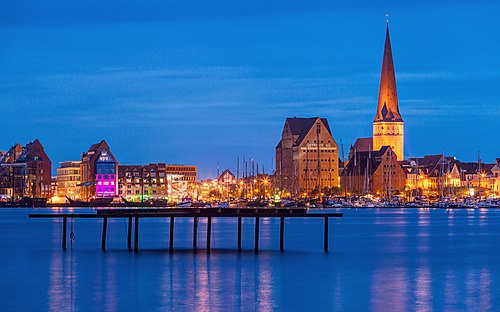
Rostock is a prominent city located in the northern part of Germany, specifically in the state of Mecklenburg-Vorpommern. With a population of approximately 210,000 residents, it is the largest city in this state and holds significant historical importance as a Hanseatic city. Founded in the 12th century, Rostock was once a major center for trade and commerce in the Baltic Sea region, which contributed to its development as a bustling port city. The city’s historical architecture, including the medieval St. Mary's Church and the 13th-century city walls, reflects its rich cultural heritage. Rostock’s Old Town features cobbled streets and significant landmarks, creating a picturesque environment that attracts both tourists and residents alike.
In addition to its historical significance, Rostock is also known for its vibrant educational landscape anchored by the University of Rostock, one of Germany's oldest universities, founded in 1419. The university plays a crucial role in the region's economy and innovation landscape, fostering research and education in various fields. Rostock also boasts a thriving economy driven by shipping, tourism, and renewable energy sectors, which have been growing in importance in recent years. The city hosts the Rostock Port, one of the largest ports in Germany, facilitating maritime trade and offering ferry connections to Scandinavia and beyond. Furthermore, Rostock is famous for its annual events like the Hanse Sail, which celebrates the maritime heritage of the Hanseatic League, attracting visitors from around the world.
Culturally, Rostock offers a lively scene with various museums, theaters, and galleries that showcase local and international art. The city's location along the Warnow River and its proximity to the Baltic Sea provide opportunities for outdoor activities, including sailing, hiking, and beach outings. Rostock also emphasizes sustainability, with many initiatives aimed at preserving its natural environment and promoting green technologies. As a blend of historical significance, economic vitality, and cultural richness, Rostock continues to be an influential city in northern Germany, poised for growth and development in the coming years.
Facts about Rostock
- Rostock is home to the University of Rostock, founded in 1419, making it one of the oldest universities in the world.
- As a former Hanseatic city, Rostock played a crucial role in trade during the Middle Ages, preserving elements of its maritime heritage.
- The city boasts the largest church in northern Germany, St. Mary's Church (Marienkirche), which features a famous astronomical clock dating back to the 15th century.
- Rostock has a significant connection to the sea, with its harbor being one of the busiest in Germany, hosting various maritime events including the Hanse Sail, the largest tall ship gathering in the world.
- The historic old town of Rostock features well-preserved medieval buildings, showcasing the architectural styles of different eras in German history.
- Rostock operates a popular ferry service to Sweden, which contributes to its significance as a gateway to Scandinavia.
- The city hosts the Rostock Christmas Market, one of the oldest and largest Christmas markets in Germany, attracting thousands of visitors each year.
- Rostock is known for its unique citizen's festival, the Rostock Kulturelle Nacht, which celebrates local culture with art, music, and performances throughout the city.
- The city played a significant role in German history during the GDR period, acting as a center for resistance and culture under communist rule.
- Rostock's proximity to the Baltic Sea includes access to beautiful beach resorts like Warnemünde, known for its sandy shores and historic lighthouse.