Rostov-na-Donu, Russian Federation
- 1,130,305 people
- 18 places to visit
- 47.2357, 39.7015
Places to Visit (18)
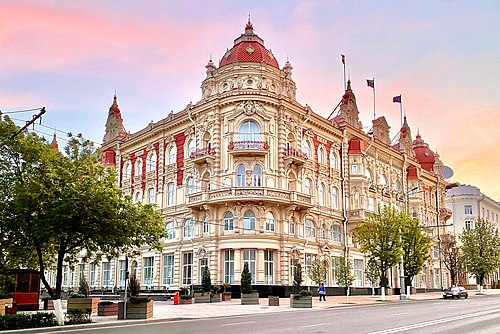
Rostov-on-Don, often referred to simply as Rostov, is a significant city located in the Southern Federal District of the Russian Federation. Founded in 1749, it lies on the banks of the Don River and serves as the administrative center of Rostov Oblast. With a population of over a million residents, it is one of the largest cities in the southern part of Russia and plays a crucial role as a cultural, economic, and transport hub. The city’s strategic position at the crossroads of various trade routes enhances its importance, making it a vital commercial center. Rostov is well connected to other regions of Russia and the neighboring countries, featuring a robust transport infrastructure that includes road, rail, and air travel.
Rostov-on-Don is renowned for its rich history and diverse cultural heritage. The city was historically significant due to its role in trade and military logistics, especially during the 19th and 20th centuries. Today, Rostov is known for its architectural sites, including the Rostov Cathedral, which showcases a blend of styles from different eras, and the Don Cossack Museum, which highlights the region's unique Cossack traditions. The local economy is diverse, encompassing industries such as agriculture, manufacturing, and services, with a growing emphasis on technology and innovation. Additionally, Rostov is home to several universities and educational institutions, fostering a vibrant intellectual community. The city also hosts various cultural events and festivals, reflecting its dynamic social life. With its historical significance, economic vitality, and cultural richness, Rostov-on-Don remains an essential part of contemporary Russian life.
Facts about Rostov-na-Donu
- Rostov-na-Donu is historically known as a major cultural and economic center of the Southern Russia region, often referred to as the 'Gate to the Caucasus'.
- The city is located on the banks of the Don River, which has been essential for trade and transport since ancient times.
- Rostov-na-Donu is home to the Rostov State Musical Theater, which is one of the oldest theaters in southern Russia, established in 1932.
- The city played a significant role during World War II and was a key site for military strategies due to its geographic location.
- It is famously associated with the Don Cossacks, who have a unique culture and history that influences the region’s identity.
- Rostov-na-Donu hosts the annual Rostov International Theatre Festival, which attracts artists and audiences from across Russia and internationally.
- The city is known for its unique architectural styles, blending elements of Russian and Soviet design with local traditions.
- Rostov-na-Donu has one of the largest waterfronts in Russia, known as the 'Promenade of the Don', offering recreational spaces and beautiful views.
- The local cuisine is influenced by various cultures, with dishes like 'Shawarma' and 'Chakhokhbili' being popular due to the city's multicultural atmosphere.
- In 2018, Rostov-na-Donu served as one of the host cities for the FIFA World Cup, showcasing its modern infrastructure and hospitality to international visitors.