Rovigo, Italy
- 50,279 people
- 14 places to visit
- 45.0749, 11.7851
Places to Visit (14)
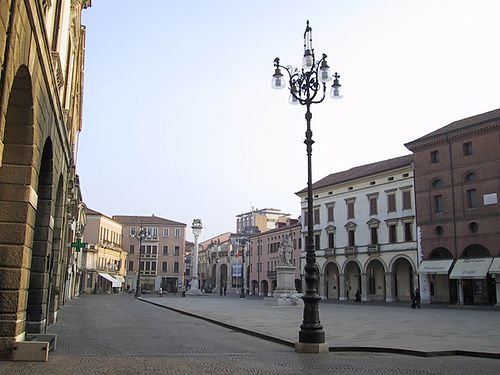
Rovigo is a city located in the northeastern part of Italy, serving as the capital of the Province of Rovigo in the Veneto region. It lies at the confluence of the Adige and Po rivers, about 80 kilometers southwest of Venice. With a population of around 50,000 inhabitants, Rovigo is characterized by its rich history, which dates back to Roman times when it was known as “Rhodigium.” The city played a significant role during the Middle Ages as a center for trade and agriculture, contributing to its development and strategic importance in the region.
The historical architecture of Rovigo reflects a blend of styles, showcasing its evolution over the centuries. Notable landmarks include the imposing Palazzo Roverella, which houses an art gallery and hosts exhibitions, and the 18th-century Teatro Sociale, known for its stunning interior and lively cultural events. The city's central square, Piazza Vittorio Emanuele II, is a focal point for local life, surrounded by shops, cafes, and historical buildings. Rovigo is also famous for its beautiful parks and gardens, such as Parco della Musica, which provide green spaces for residents and visitors alike.
Economically, Rovigo benefits from a diverse base, with agriculture, manufacturing, and service industries being significant contributors. The surrounding countryside is primarily agricultural, known for producing grains, vegetables, and renowned wines. In recent years, the city has also embraced modern developments, fostering innovation and technology while preserving its rich cultural heritage. Rovigo's strategic location makes it accessible to other major cities in the Veneto region, enhancing its appeal as a destination and regional hub. Visitors to Rovigo can experience a city that harmoniously blends its historical roots with contemporary life, offering a unique glimpse into Italian culture.
Facts about Rovigo
- Rovigo is known as the 'City of Mosaic', due to its rich tradition of mosaic art that dates back to the Roman period, setting it apart from many other Italian towns.
- The city contains the famous Palazzo Roverella, which houses a significant art collection and features a notable exhibition of artworks by the Venetian Renaissance artist Palma il Vecchio.
- Rovigo has hosted the International Festival of the Arts, which emphasizes local artistic heritage and fosters contemporary artistic expression uncommon in other Italian cities.
- The historic center of Rovigo is characterized by its unique blend of architecture, including medieval buildings, Renaissance palaces, and Baroque churches, reflecting its diverse historical influences.
- Rovigo is located at the confluence of several rivers, including the Adige and the Po, playing a crucial role in Venetian trade and agriculture, distinct from many inland cities.
- The city is home to the Rovigo Rugby Club, one of Italy's premier rugby teams, contributing significantly to the sport's popularity in Italy, particularly in the Veneto region.
- Rovigo's annual festival, 'Festa del Vino', celebrates the region's rich viticultural heritage and features local wines, making it a unique cultural event in the landscape of Italian festivals.
- The Cathedral of Rovigo, dedicated to Saint Stephen, features an impressive Baroque interior and stands as a testament to the city's historical and religious significance.
- Rovigo is often overlooked compared to larger cities like Venice and Padua, offering a more authentic Italian experience with fewer tourists and a relaxed atmosphere.
- The city is surrounded by picturesque countryside and canals, making it a gateway for exploring the lesser-known natural beauty of the Veneto region.