Ruda Śląska, Poland
- 146,189 people
- 12 places to visit
- 50.2558, 18.8556
Places to Visit (12)
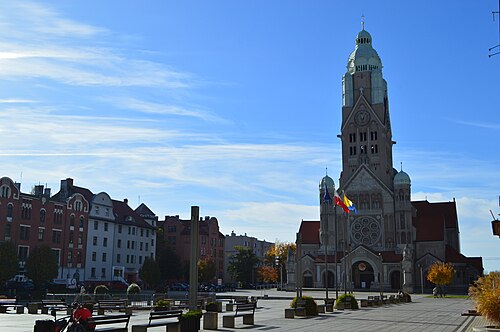
Ruda Śląska is a city located in Silesia, southern Poland, and is part of the Upper Silesian Metropolitan Union, a metropolitan area that includes several cities in the region. Established as a city in 1950, Ruda Śląska has a rich history that dates back to the early Middle Ages when it was predominantly an agricultural settlement. The area underwent industrialization in the 19th century, becoming a significant center for coal mining and heavy industry, which played a crucial role in the economic development of Upper Silesia. Key industries historically included coal mining, metallurgy, and textile manufacturing, and although many of these industries faced decline by the late 20th century, efforts have been made to transition to a more diversified economy.
The city boasts a mix of architectural styles and green spaces, reflecting its industrial heritage as well as its ongoing urban development. Notable landmarks include the Church of St. Paul the Apostle, an example of the neo-Gothic style, and the historic miners' houses that are emblematic of the city’s mining past. Ruda Śląska is also known for its numerous parks and recreational areas, which provide residents and visitors with opportunities for outdoor activities and leisure. The city’s cultural life includes various events and festivals that celebrate regional traditions, while educational institutions contribute to a focus on culture and community development. Transport links are well established, with access to highways and railways, facilitating connections to nearby cities like Katowice, which is the regional capital.
As part of Poland’s broader economic transformation, Ruda Śląska has embarked on revitalization projects aimed at improving urban infrastructure and enhancing the quality of life for its residents. The local government is actively engaged in promoting sustainable development practices, emphasizing the importance of environmental conservation and the modernization of urban areas. With a population of over 140,000, Ruda Śląska continues to evolve from its industrious past into a city that embraces innovation while preserving its cultural identity and heritage, making it an integral part of the Silesian region’s landscape.
Facts about Ruda Śląska
- Ruda Śląska is a significant industrial hub in Poland, particularly known for its coal mining history, which played a crucial role in the region's development.
- The city was established in 1959 through the merger of several smaller towns, making it a relatively young city compared to others in Poland.
- Ruda Śląska is home to the largest coal mine in the Silesian Voivodeship, known as the 'Borynia-Zofiówka' mine, which reflects the city's rich mining heritage.
- The city has unique architectural features, including the historic Church of St. Andrew, which showcases elements typical of Silesian ecclesiastical design.
- Ruda Śląska hosts the annual 'Ruda Śląska Carnival', which is a vibrant celebration of local culture, music, and traditions, attracting visitors from across the region.
- One of the city's notable landmarks is the 'Szałas' sculpture, a modern art installation symbolizing the transformation of the industrial landscape into a cultural one.
- Ruda Śląska is part of the Upper Silesian conurbation, one of the largest urban areas in Poland, facilitating economic and social interactions among neighboring cities.
- The city has a rich history of Polish-German cultural influences, evident in its diverse architectural styles and local customs.
- Ruda Śląska also has extensive green spaces, such as the 'Park im. A. Mickiewicza', offering residents and visitors a place for recreation amidst the urban environment.
- The city's commitment to environmental sustainability is demonstrated by projects aimed at revitalizing former mining areas into parks and community spaces.