Runcorn, United Kingdom
- 62,872 people
- 19 places to visit
- 53.3421, -2.7297
Places to Visit (19)
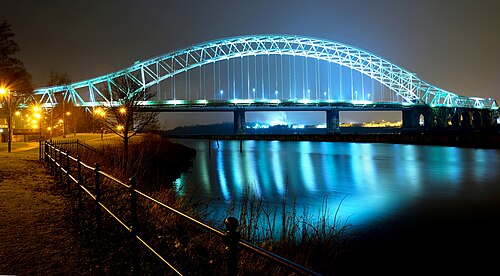
Runcorn is a town in Cheshire, England, situated on the southern bank of the River Mersey. Historically part of the county of Cheshire, it lies approximately 20 miles southwest of Manchester and 8 miles northwest of Liverpool. The origins of Runcorn can be traced back to the Anglo-Saxon period, with its name deriving from Old English, meaning "the rushy land." Throughout the centuries, Runcorn developed from a small fishing village into an important industrial town, particularly during the 19th and early 20th centuries, when it became a significant center for chemical production and shipbuilding due to its advantageous location and access to the river and the Mersey Canal.
Runcorn's industrial growth was propelled by the construction of the Runcorn-Widnes bridge and various infrastructure projects, which facilitated transportation and commerce. The town is known for its prominent landmarks, such as the Runcorn Bridge, a cantilever bridge completed in 1961, which spans the River Mersey and connects Runcorn to Widnes. The town also features the silver Jubilee Bridge, inaugurated in 1961, which plays a crucial role in local traffic. In contemporary times, Runcorn has diversified economically, with industries including logistics, distribution, and various manufacturing sectors. The town is home to the Daresbury Laboratory, a national research facility focused on advanced scientific research, reflecting Runcorn's ongoing evolution.
Runcorn boasts a range of recreational and cultural amenities, including parks, sports facilities, and community centers. The town's landscape is characterized by green spaces such as the Town Park and the historic Runcorn Hill. Runcorn also participates in community events and festivals, which foster civic pride and engagement among residents. Furthermore, the town benefits from various educational institutions, from primary schools to secondary schools, contributing to its family-friendly reputation. While Runcorn might not be as internationally recognized as neighboring cities like Liverpool, it offers a unique blend of historical significance, industrial heritage, and modern developments, making it an integral part of the region's fabric.
Facts about Runcorn
- Runcorn is home to the Runcorn Bridge, a prominent landmark that opened in 1961 and is notable for its distinctive design, significantly improving transportation links across the River Mersey.
- The town developed rapidly during the Industrial Revolution, particularly due to its strategic position near the Manchester Ship Canal, making it a hub for transport and trade.
- Runcorn was one of the first places in the UK to be designated as a New Town in the 1960s, aimed at addressing housing shortages and urban congestion in larger cities.
- The town features the Bridgewater Canal, a significant waterway that opened in 1761, serving as a key route for the transport of coal and other goods during the industrial period.
- Runcorn is known for its historical salt industry, with salt production dating back to the Roman era, leading to the establishment of numerous salt works in the area.
- Runcorn boasts the historic Norton Priory, a medieval priory founded in the 12th century, which is now a museum and archaeological site showcasing its rich heritage.
- The town celebrates its maritime culture with the annual Runcorn River Festival, highlighting the importance of the River Mersey to the local community and economy.
- Runcorn is adjacent to the Daresbury Laboratory, a leading research facility that is part of the UK's science and technology landscape, focusing on advanced scientific studies.
- The town features several parks and green spaces, including the 200-acre Town Park, which provides recreational opportunities and hosts community events throughout the year.
- Runcorn's population has grown significantly since the 20th century, and it is now an integral part of the Liverpool City Region, contributing to the economic and cultural diversity of the area.