Saint-Dié-des-Vosges, France
- 24,628 people
- 7 places to visit
- 48.2875, 6.9478
Places to Visit (7)
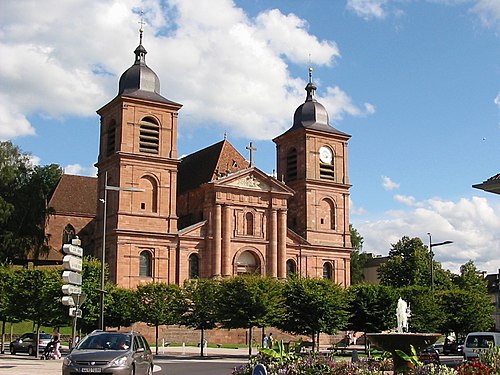
Saint-Dié-des-Vosges is a commune located in the Vosges department in the Grand Est region of northeastern France. Nestled at the confluence of the Meurthe and Rabodeau rivers, the city sits at an elevation of approximately 400 meters. With a population of around 20,000 residents, it serves as a significant cultural and economic center in the Vosges mountains. The area has historical significance, with its origins tracing back to Roman times, when it was known as "Diedt," named after Saint Die, a Christian martyr. The city gained prominence in the early 18th century as a center for the printing industry and for its role in the development of cartography, particularly through the work of geographic pioneer Gérard Mercator.
Saint-Dié-des-Vosges is notable for its vibrant cultural scene and historical architecture. The town is home to several notable landmarks, including the Gothic-style Notre-Dame Church, a testament to the region’s religious heritage, and the Saint-Dié Cathedral, originally built in the 12th century but expanded in the following centuries. The city is also recognized for its role in the promotion of geographic learning and innovation. In fact, it hosts an annual event called the "Congrès International de Géographie" that attracts geographers and enthusiasts from around the world. Additionally, Saint-Dié is known for its proximity to natural attractions, such as the Hautes-Vosges mountain range, which offers opportunities for outdoor activities like hiking, mountain biking, and skiing, enhancing the region's appeal for both locals and tourists.
The economy of Saint-Dié-des-Vosges has evolved over the years, transitioning from traditional industries to modern sectors, including commerce and services. The city is strategically located along key transportation routes, enhancing its connectivity and making it an essential hub for trade within the region. The local government promotes initiatives to preserve the environment and improve quality of life, while the community engages actively in cultural events, fostering a strong sense of identity and belonging. Overall, Saint-Dié-des-Vosges embodies a blend of historical significance, cultural richness, and natural beauty, making it a unique destination in France.
Facts about Saint-Dié-des-Vosges
- Saint-Dié-des-Vosges is known for its historical significance in the field of cartography, being the birthplace of Gerardus Mercator, the famous cartographer who developed the Mercator projection.
- The city hosts the annual 'Festival International de Géographie,' attracting scholars and geography enthusiasts from around the world to discuss geographical issues and celebrate the discipline.
- Saint-Dié-des-Vosges was extensively damaged during World War II, particularly during the 1944 bombing, leading to a significant reconstruction effort that has shaped its modern architecture.
- The city is also recognized for its connection to the Vosges Mountains, providing numerous opportunities for outdoor activities such as hiking, skiing, and mountain biking.
- Saint-Dié is home to a unique granite relief map of the Vosges Mountains, known as the 'Plan relief,' which is a key educational tool for geography students and a notable landmark in the city.
- The city features a vibrant cultural scene, including several museums such as the Musee Pierre-Noël, which showcases local history and art.
- Saint-Dié-des-Vosges has a significant textile industry heritage, particularly in the production of high-quality fabrics and clothing, stemming from its historical role in the region's textile manufacturing.
- The city has a distinct architectural style characterized by timber-framed houses, a common feature in northeastern France, which adds to its charm and historical significance.
- Saint-Dié is twinned with several cities, including Saint Dyé in Portugal and Villars-Bonnot in France, fostering international relationships and cultural exchange.
- Every two years, Saint-Dié-des-Vosges holds the 'Saint-Dié Mountain Festival,' celebrating local culture, music, and gastronomy, emphasizing the city's community spirit and regional pride.