Saint-Laurent-du-Maroni, French Guiana
- 24,287 people
- 4 places to visit
- 5.5036, -54.0294
Places to Visit (4)
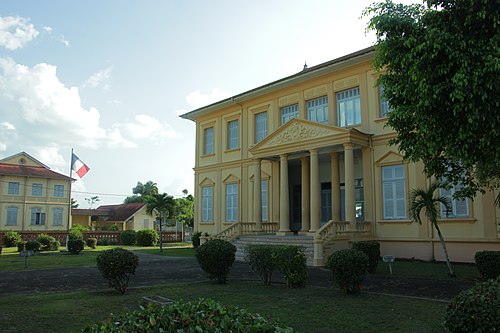
Saint-Laurent-du-Maroni is a commune located in French Guiana, an overseas region of France situated on the northeastern coast of South America. Founded in 1851, the town serves as the capital of the arrondissement of Saint-Laurent-du-Maroni and is one of the principal urban centers in the region. The commune is strategically positioned along the Maroni River, which forms the natural border between French Guiana and Suriname. This location has historically made it significant, serving as a gateway for trade and cultural exchange between the two nations. The town has a diverse population that reflects a mix of indigenous peoples, Maroons, Creole, and various other ethnic groups, contributing to its rich cultural tapestry.
Saint-Laurent-du-Maroni is known for its historical significance, particularly in relation to the French penal colony that operated from the late 19th century until the mid-20th century. The prison complex, which included the infamous Camp de la Transportation, housed numerous convicts, including notable figures like the writer Henri Charrière, known for his autobiography "Papillon." Today, the town has transitioned from its penal past and is focused on development and urbanization. Economic activities in the area are primarily centered around agriculture, fishing, and services. With lush rainforests and the Maroni River nearby, Saint-Laurent-du-Maroni also offers opportunities for eco-tourism, attracting visitors keen on exploring its natural beauty and cultural heritage.
The town is characterized by a mix of modern and historical architectures, evident in its government buildings, schools, and cultural centers. Local governance has been increasingly proactive in promoting sustainable development and improving infrastructure. Saint-Laurent-du-Maroni is accessible via road and has a small airport connecting it to other regions of French Guiana and Brazil. The commune also celebrates its multicultural identity through various festivals and events, showcasing the traditions and customs of its diverse inhabitants. With its strategic location, historical significance, and rich cultural landscape, Saint-Laurent-du-Maroni serves as a vital part of French Guiana's heritage and contemporary identity.
Facts about Saint-Laurent-du-Maroni
- Saint-Laurent-du-Maroni is known for its rich history as a former penal colony, making it a significant site during the colonial period.
- The city is strategically located on the Maroni River, which serves as the natural border with Suriname, and plays a crucial role in trade and transportation.
- Saint-Laurent-du-Maroni is home to the only remaining historical prison facilities from the French penal colony era, which are now a museum and a major tourist attraction.
- It is recognized for its cultural diversity, being a melting pot of various ethnic groups including Creole, Maroon, Hmong, and others, contributing to its vibrant cultural tapestry.
- The city hosts the annual 'Festival of Saint-Laurent', which celebrates the local culture through music, dance, and traditional ceremonies, attracting visitors from across the region.
- Saint-Laurent-du-Maroni has a unique blend of French and Caribbean influences in its architecture, cuisine, and lifestyle, distinguishing it from other cities in French Guiana.
- The prominent Maison des Cultures de Guyane in the city promotes local culture and heritage, showcasing art, music, and crafts from various communities.
- It serves as a gateway to the Tumuc-Humac mountains and the dense Amazon rainforest, making it a hub for ecotourism and adventure activities.
- Saint-Laurent-du-Maroni is one of the largest municipalities in French Guiana in terms of area, emphasizing the vast natural landscapes surrounding the urban center.
- The city has been recognized for its efforts in sustainable development and environmental conservation, particularly in protecting the biodiversity of the Amazon rainforest.