Saint-Paul, Réunion
- 105,240 people
- 6 places to visit
- -21.0093, 55.2702
Places to Visit (6)
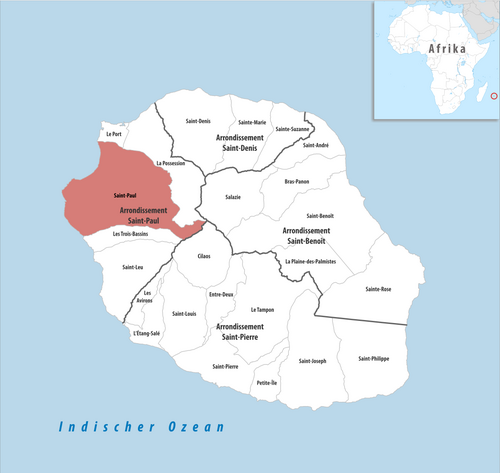
Saint-Paul is a vibrant city located on the western coast of Réunion Island, which is a French overseas department in the Indian Ocean. With a population of approximately 100,000 residents, it is one of the largest municipalities on the island and serves as a crucial economic and cultural hub. The city is distinguished by its picturesque coastal scenery, featuring beautiful beaches and a backdrop of the rugged mountains that dominate the island's interior. The Saint-Paul area is known for its rich history and diverse cultural influences, stemming from the mixing of various ethnic groups, including Creole, French, Indian, and Malagasy communities.
Historically, Saint-Paul has played a significant role in Réunion's development since its establishment in the 17th century. It was once the capital of the island, acting as a vital port for trade and commerce. The city is home to several historical landmarks, such as the Church of Saint-Paul, which dates back to the 19th century, and the remains of the old colonial architecture that can be seen throughout the area. Saint-Paul's vibrant market, known for its local handicrafts, spices, and street food, attracts both locals and tourists alike. The city is also renowned for its cultural events, including traditional festivals that celebrate the island’s diverse heritage.
In addition to its historical significance, Saint-Paul boasts a range of recreational opportunities, including outdoor activities in the nearby national parks. Visitors can explore the stunning natural landscapes, such as the Mafate cirque, which features breathtaking hiking trails. The city hosts several beaches, ideal for swimming, surfing, and sunbathing, making it a popular destination for both relaxation and adventure. With its blend of rich history, cultural diversity, and natural beauty, Saint-Paul serves as a microcosm of Réunion Island, showcasing its unique charm and appeal to residents and visitors alike.
Facts about Saint-Paul
- Saint-Paul is the largest commune in Réunion, covering an area of approximately 241 square kilometers.
- The city is home to one of the oldest markets in Réunion, the Saint-Paul Market, which has been operating since 1815 and is a vibrant hub for local produce, crafts, and food.
- Saint-Paul features the historic 'Église de Saint-Paul,' a prominent church built in the 19th century, known for its beautiful architecture and significant role in the community.
- The city has a famous natural lagoon, known as the 'Lagon de Saint-Paul,' which is a popular destination for both local residents and tourists, offering stunning views and excellent snorkeling opportunities.
- Saint-Paul was a crucial site during the island's history of sugar production, and many remnants of this agricultural past can still be seen in the surrounding landscapes.
- The town hosts the annual 'Fête de la Musique,' attracting musicians and visitors from all over the island to celebrate music and culture.
- Saint-Paul was the location where the first French settlement in Réunion was established in the 17th century, making it significant in the island's colonial history.
- The city's 'Cimetière de Saint-Paul' is notable for housing the graves of many famous figures from Réunion's history, including pirates and revolutionaries.
- Saint-Paul boasts a unique biodiversity, with nearby nature reserves that are home to many endemic species of plants and animals, making it a hotspot for eco-tourism.
- The city offers a diverse culinary scene influenced by Creole, Indian, Chinese, and French cuisines, making it a gastronomic destination within Réunion.