Saint Petersburg, Russian Federation
- 5,351,935 people
- 16 places to visit
- 59.9311, 30.3609
Places to Visit (16)
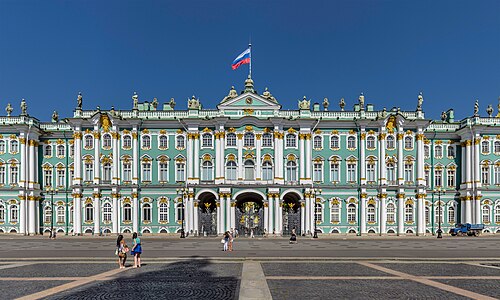
Saint Petersburg, located in the northwestern part of the Russian Federation, is the second-largest city in the country, following Moscow. Founded by Tsar Peter the Great on May 27, 1703, as part of his efforts to modernize Russia and establish a Russian presence on the Baltic Sea, Saint Petersburg has historically served as a cultural and political center. The city's design reflects Peter's vision for a European-style capital, incorporating numerous canals, bridges, and grand neoclassical architecture, resulting in its nickname, "The Venice of the North." The city's strategic location allowed it to become a significant port, facilitating trade and cultural exchange, and it acted as the capital of the Russian Empire for over two centuries until the government was moved back to Moscow in 1918.
Saint Petersburg is renowned for its rich cultural heritage and is home to numerous museums, galleries, and theaters, including the famed State Hermitage Museum, which boasts one of the largest and most valuable art collections in the world. The city also features iconic landmarks such as the Church of the Savior on Spilled Blood, the Winter Palace, and the Peter and Paul Fortress. With its vibrant arts scene, Saint Petersburg hosts various music and theater festivals that celebrate its literary tradition and revolutionary history. Despite challenges such as political turmoil and economic shifts throughout the 20th century, the city has retained its status as a major cultural hub, attracting millions of tourists annually who are drawn to its historic charm and beauty.
Today, Saint Petersburg is a major economic center in Russia, contributing significantly to the country’s GDP through industries like shipping, energy, and manufacturing. The city is also an educational hub, housing several prestigious universities and research institutions. Furthermore, Saint Petersburg is characterized by its unique climatological conditions, with long hours of daylight during the summer and harsh winters, which influence the local lifestyle and culture. The city's well-preserved historical architecture, combined with its ongoing cultural developments, continues to make it a dynamic and attractive destination for both residents and visitors alike.
Facts about Saint Petersburg
- Saint Petersburg was founded by Tsar Peter the Great in 1703 and served as the capital of Russia for over 200 years until 1918.
- The city is famous for its extensive network of canals, often referred to as the 'Venice of the North.'
- The Hermitage Museum, one of the largest and oldest museums in the world, is located in Saint Petersburg and houses a vast collection of art and cultural artifacts.
- Saint Petersburg is home to the annual White Nights festival, celebrated during the summer months when the sun remains above the horizon for nearly 24 hours.
- The city features the iconic Church of the Savior on Blood, known for its colorful onion domes and intricate mosaics, built on the site where Emperor Alexander II was assassinated.
- Peterhof Palace, located just outside the city, is famous for its stunning gardens and fountains and is often referred to as the 'Russian Versailles.'
- Saint Petersburg played a significant role in the Russian Revolution of 1917 and is home to the famous Winter Palace, the former residence of Russian monarchs.
- The city's unique architectural styles combine Baroque, Neoclassical, and Russian Revival influences, leading to its designation as a UNESCO World Heritage Site.
- The Neva River, which runs through Saint Petersburg, plays a crucial role in the city's navigational system and cultural life, with many bridges connecting its islands.
- Saint Petersburg hosts the world's largest open-air museum of street art, highlighting the contemporary cultural vibrancy alongside its historical legacy.