Saintes, France
- 29,512 people
- 14 places to visit
- 45.7442, -0.6334
Places to Visit (14)
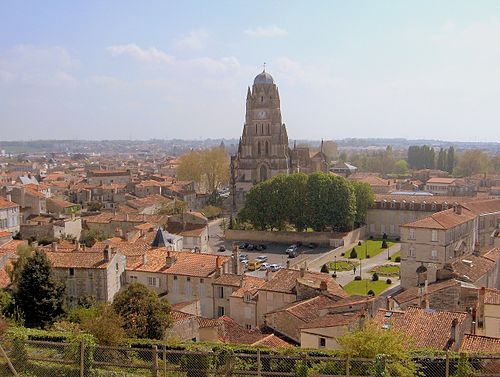
Saintes is a historic city located in the Charente-Maritime department of southwestern France. Straddling the banks of the Charente River, it is approximately 30 kilometers from the Atlantic coast and about 100 kilometers from the city of Bordeaux. Known for its rich history and Roman heritage, Saintes dates back over two millennia, originally founded as "Mediolanum Santonum," a settlement for the Santones tribe. The city flourished during Roman times, becoming a significant urban center and administrative capital. Remnants of this era can still be observed, including the remarkable Arc de Germanicus and the well-preserved amphitheater, which dates back to the 1st century CE and could hold up to 3,500 spectators.
Today, Saintes is recognized for its architectural jewels, charming streets, and vibrant cultural scene. The city blends its ancient heritage with modern life, and this is evident in the pedestrian-friendly center filled with shops, cafes, and restaurants. The Saint-Eutrope Cathedral, a UNESCO World Heritage site, showcases Romanesque architecture and serves as another testament to the city's historical significance. Saintes also hosts several annual festivals, attracting visitors to experience its cultural offerings. Its location provides a strategic advantage, making it an important hub for commerce and tourism in the region, further enriched by its proximity to the vineyards of Cognac and the picturesque landscapes of the Saintonge region. With a population of around 25,000 residents, Saintes continues to thrive as a vibrant community that honors its rich past while looking forward to the future.
Facts about Saintes
- Saintes is home to the impressive Roman Amphitheatre, a well-preserved structure that dates back to the 1st century AD, making it one of the oldest in France.
- The city boasts the remains of a Roman aqueduct, known as the Saintes Aqueduct, which showcases advanced engineering techniques of ancient Rome.
- Saintes features the stunning Saint-Eutrope Cathedral, a UNESCO World Heritage Site, known for its distinctive Romanesque architecture and unique bell tower.
- The town is noted for the historic Arch of Germanicus, a triumphal arch built in honor of the Roman general Germanicus, symbolizing its rich Roman heritage.
- Saintes was a significant center for religious pilgrimage in the Middle Ages, particularly for its connections to Saint Eutrope, the city's namesake.
- Saintes hosts the annual 'Jazz à Saintes' festival, which attracts musicians and audiences from around the world, highlighting its vibrant cultural scene.
- The city's location on the Charente River historically made it an essential hub for trade and transportation in southwestern France.
- Saintes has a remarkable collection of Roman artifacts housed in the Musée de Saintes, one of the largest archaeological museums in the region.
- The town was the capital of the Roman province of Saintonge, emphasizing its historical significance during the Roman Empire.
- Saintes has a unique blend of historical influences, having been shaped not only by Roman heritage but also by the subsequent medieval and modern periods.