Salamína, Greece
- 25,370 people
- 6 places to visit
- 37.9291, 23.5133
Places to Visit (6)
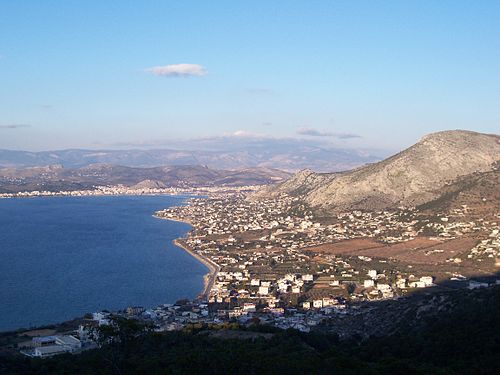
Salamina is a notable island and municipality located in the Saronic Gulf, southwest of mainland Athens, Greece. It is separated from the Attic coast by a narrow strait, measuring approximately three kilometers in width at its narrowest point. With a land area of around 95 square kilometers, Salamína is the largest island in the Saronic group and boasts a rich historical significance that dates back to ancient times. The island's name is synonymous with the famed naval Battle of Salamis in 480 BC, where the Greek fleet, led by Themistocles, achieved a decisive victory against the Persian navy during the Greco-Persian Wars. This battle is celebrated as one of the pivotal moments in ancient Greek history, as it shifted the balance of power in favor of the Greek city-states and laid the groundwork for the eventual defeat of the Persian forces.
Salamina is characterized by its rugged terrain, traditional villages, and a coastline dotted with scenic beaches. The town of Salamina, the island's main settlement, serves as the administrative and commercial center. Its streets are lined with neoclassical architecture and a variety of shops, cafés, and tavernas offering both local delicacies and fresh seafood. The island's demographics are reflective of historical trends, populated primarily by descendants of those who fought in the Battle of Salamis, and today, it has a mix of permanent residents and seasonal visitors who flock to its shores during the summer months. Additionally, economic activities on the island include fishing, agriculture, shipping, and tourism, with visitors drawn to its historical landmarks, natural beauty, and recreational opportunities. Among the significant sites is the ancient theater of Salamis, remnants from various periods of the island's long history, and the picturesque Monastery of Saint Nicholas, which further illustrates the rich cultural tapestry of the area.
The strategic location of Salamina has contributed to its continuous habitation and significance, not just in antiquity but throughout the ages. Today, it remains an attractive destination for Athenians looking for an accessible getaway, offering ferry services that connect the island to Piraeus, the main port of Greece. Known for its tranquil ambiance, friendly atmosphere, and natural landscapes, Salamina is a place where history and nature intertwine, welcoming visitors to explore its storied past while enjoying the serene beauty of the Aegean Sea.
Facts about Salamína
- Salamína is known for the historic naval Battle of Salamis, fought in 480 BC, which was a decisive victory for the Greek city-states against the Persian Empire.
- The city is located on the island of Salamis, the largest island in the Saronic Gulf, which is just a short ferry ride from Athens.
- Salamína is famous for its rich mythology, particularly the legend surrounding Ajax the Great, who is said to have been buried on the island.
- The island is home to the ancient ruins of the Temple of Aphaia, dedicated to the goddess Aphaia, which dates back to the 5th century BC.
- Salamína hosts the annual Festival of Salamis, a cultural event that commemorates the historic battle and features various theatrical performances and reenactments.
- The city has a population of about 38,000 people, making it one of the less densely populated areas in proximity to Athens, giving it a unique small-town feel.
- Salamína is known for its traditional shipbuilding industry, with local craftsmen continuing to build wooden fishing boats using age-old techniques.
- The Battle of Salamis is celebrated as a symbol of cooperation among Greek city-states, highlighting the importance of unity against a common foe.
- The island is characterized by its beautiful beaches and clear waters, making it a popular destination for both locals and tourists looking for a quiet getaway.
- Salamína played a significant role in the Greek War of Independence in the 19th century, serving as a strategic location for revolutionary activities against Ottoman rule.