Salé, Morocco
- 972,299 people
- 11 places to visit
- 34.0516, -6.8126
Places to Visit (11)
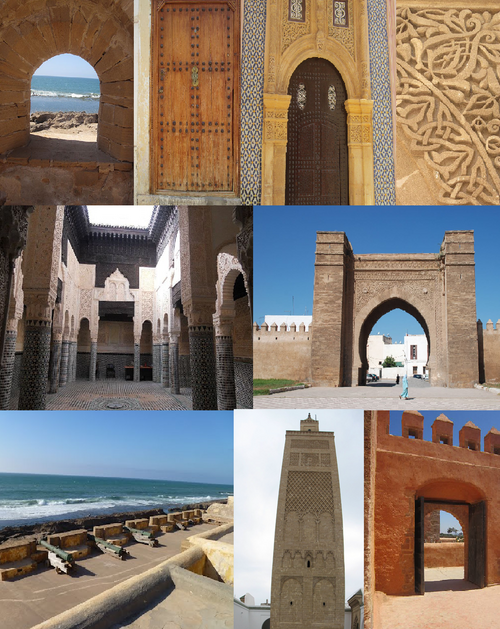
Salé is a city located on the Atlantic coast of Morocco, situated just across the Bou Regreg River from the nation's capital, Rabat. As one of the oldest cities in the country, Salé has a rich historical and cultural heritage that dates back to the 9th century when it was founded by the Berbers. The city played a significant role during the medieval period, particularly as a center for trade and piracy, which greatly contributed to its economic development. Salé's strategic location along the Atlantic trade routes made it an attractive destination for various civilizations, including the Arab, Spanish, and French, each leaving their unique mark on the city's architecture and culture.
The old medina of Salé is characterized by narrow winding streets, traditional Moroccan architecture, and historical monuments that highlight its past. Among these are the Great Mosque of Salé, constructed in the 12th century and known for its distinct minaret, and several well-preserved kasbahs. The city is also famous for its artisanal crafts, particularly pottery and weaving, which reflect the rich cultural diversity of the region. Salé has embraced modernization while preserving its historical identity, and today, it functions as a vibrant urban center with a growing population that exceeds 1 million. This population growth is attributed to both domestic migration and its proximity to Rabat, making it an attractive area for residents seeking a balance between city life and coastal living.
In addition to its rich cultural history, Salé boasts beautiful beaches and a pleasant Mediterranean climate, attracting tourists and locals alike. The city's reputation as a gateway to the historical sites of Rabat enhances its allure, as visitors can easily explore both urban landscapes in a single trip. Salé is also home to various educational institutions and has seen investments in infrastructure, making it a significant economic hub. Its blend of tradition and modernity, along with its historical significance and scenic location, make Salé a noteworthy city in Morocco, contributing to the country's diverse cultural tapestry.
Facts about Salé
- Salé is the oldest city in the Rabat-Salé-Kénitra region, founded in the 10th century and known for its historic medina and ramparts.
- The city is notable for its proximity to Rabat, the capital city of Morocco, and together they form a significant urban area with shared cultural and economic activities.
- Salé is famous for its traditional craft of pottery and ceramics, particularly its exquisite 'Salé pottery' known for intricate designs and quality.
- The Great Mosque of Salé, built in the 12th century, is one of the oldest mosques in Morocco and features stunning architecture and historical significance.
- Salé was historically a haven for Barbary pirates in the 17th century, contributing to its vibrant maritime history and development during that era.
- The Tomb of Ibn Danan, a renowned Jewish scholar, is located in Salé, highlighting the city's historical Jewish community and its multicultural past.
- Salé hosts the annual Festival of the Medina, celebrating its rich cultural heritage through music, art, and traditional crafts, attracting both locals and tourists.
- The city is home to the impressive Kasbah of the Oudayas, which features distinctive architecture and gardens, offering a picturesque view of the Bou Regreg River.
- Salé's beaches, especially the popular Loto Beach, attract visitors looking for sun and relaxation, differentiating it from many other Moroccan cities not located near the coast.
- The city’s historical significance as a center for Islamic scholarship continues today with institutions dedicated to preserving its rich educational legacy.