Salerno, Italy
- 125,797 people
- 13 places to visit
- 40.6813, 14.7744
Places to Visit (13)
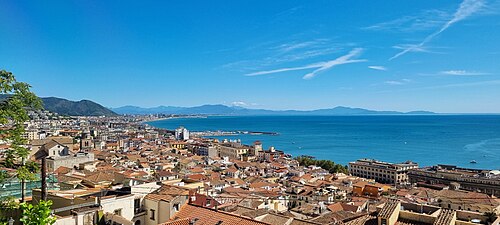
Salerno is a coastal city in southern Italy, located in the Campania region along the Tyrrhenian Sea. It is the capital of the province of the same name and is situated about 56 kilometers southeast of Naples. Known for its rich history, Salerno dates back to ancient Roman times, evidenced by various archaeological remains found in the area. The city flourished during the Middle Ages, particularly in the 11th century, when it became an important cultural and medical center in Europe. The Salerno Medical School, one of the first universities in Europe, played a pivotal role in the advancement of medical science and education, attracting scholars from across the continent.
The city's picturesque waterfront, characterized by palm-lined promenades and sandy beaches, draws both tourists and locals alike. Salerno's historical center features charming narrow streets, vibrant markets, and notable landmarks, including the stunning Salerno Cathedral, which dates back to the 11th century and showcases a mix of Romanesque and Baroque architecture. The city is also home to the Castello di Arechi, a medieval castle perched on a hilltop, offering panoramic views of the Gulf of Salerno. Cultural events, such as the annual Festival of Salerno and the Christmas lights display, further enhance the city's appeal. Gastronomy plays an essential role in Salerno’s culture, with traditional dishes featuring fresh seafood, locally grown vegetables, and regional wines.
Salerno serves as a gateway to the Amalfi Coast, a UNESCO World Heritage site celebrated for its stunning cliffs, vibrant villages, and breathtaking views. It is well-connected by transportation, including a railway line and ferry services to neighboring areas. The city's strategic location makes it a popular base for exploring nearby attractions such as Positano, Amalfi, and Ravello. With its rich history, dynamic culture, and beautiful landscapes, Salerno offers a unique blend of ancient heritage and modern vibrancy, making it an inviting destination for visitors from around the world.
Facts about Salerno
- Salerno is home to the Salerno Cathedral, which dates back to the 11th century and houses the tomb of Saint Matthew, one of the twelve apostles.
- The city is known for the medieval medical school, the Schola Medica Salernitana, which was one of the most important medical schools in medieval Europe and is considered the first university of medicine.
- Salerno is famous for its 'Lungomare', a scenic seaside promenade that is regarded as one of the most beautiful in Italy, offering stunning views of the Amalfi Coast.
- Every year, Salerno hosts the 'Luci d'Artista' event, a spectacular light festival that attracts visitors with intricate light installations throughout the city, especially during the winter months.
- The city played a significant role during World War II as a critical landing point for Allied forces during the Italian Campaign, known as the Salerno Landings.
- Salerno has a vibrant culinary scene that is famous for its unique local dishes such as 'pasta e patate' and 'delizie al limone', utilizing locally sourced produce, especially lemons.
- The historic center of Salerno is characterized by its narrow streets, medieval architecture, and vibrant atmosphere, notably different from the more urbanized centers of other Italian cities.
- Salerno is known for its botanical garden, the Giardino della Minerva, which was established in the 14th century and is one of the oldest botanical gardens in Italy, with a focus on medicinal plants.
- The city is strategically located at the convergence of the Amalfi Coast and the Cilento Coast, making it a gateway for exploring beautiful coastal areas and UNESCO World Heritage Sites.
- Salerno's port is one of the main hubs for ferry services to the islands of Capri and Ischia, distinguishing it as a key maritime link in southern Italy.