Salvador, Brazil
- 2,711,840 people
- 18 places to visit
- -12.9777, -38.5016
Places to Visit (18)
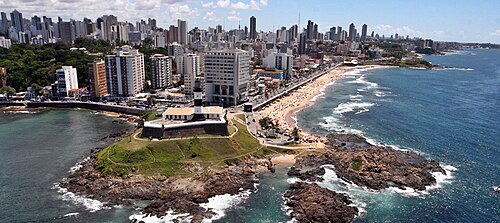
Salvador, the capital of the Brazilian state of Bahia, is one of the country's oldest cities and boasts a rich cultural and historical heritage. Founded in 1549 by the Portuguese as a colonial settlement, Salvador served as the first capital of Brazil until 1763, when Rio de Janeiro took over this status. The city's unique location on a peninsula between the Bay of All Saints and the Atlantic Ocean has made it an important port and trading hub throughout history. Salvador's historic center, known as Pelourinho, is a UNESCO World Heritage site, characterized by its cobblestone streets, colorful colonial architecture, and vibrant cultural scene. The city is renowned for its Afro-Brazilian culture, a legacy of the significant African influence resulting from the transatlantic slave trade, which has shaped local music, cuisine, and religious practices.
Economically, Salvador has a diverse landscape, with sectors such as tourism, commerce, and services playing crucial roles in its development. The city's beautiful beaches, such as Porto da Barra and Praia do Forte, attract both local and international visitors. Salvador also hosts numerous events and festivals, the most famous being the Carnival, celebrated with extravagant parades, music, and dance, particularly the energetic rhythms of samba and axé. The mix of cultures can be seen in its cuisine as well, featuring dishes like acarajé (a black-eyed pea fritter filled with shrimp and spices) and vatapá (a spicy paste made from bread, shrimp, and peanuts). Salvador’s commitment to preserving its cultural heritage continues to draw attention to its role as a melting pot of traditions, making it a vibrant and dynamic city that reflects Brazil’s diverse identity.
Facts about Salvador
- Salvador is the capital of Bahia and is known for its rich Afro-Brazilian culture, making it a unique cultural hub in Brazil.
- The historic district of Pelourinho, a UNESCO World Heritage Site, is famous for its colonial Portuguese architecture and vibrant street art.
- Salvador is home to the world’s largest Carnival celebration, attracting millions of visitors each year with its spectacular parades and music.
- The city has a unique culinary scene, famous for its Afro-Brazilian dishes, particularly acarajé, a deep-fried ball made from black-eyed peas.
- Salvador was the first capital of Brazil, established in 1549, before the capital was moved to Rio de Janeiro in 1763.
- The city has a distinctive and varied topography; it is built on a steep hill with the lower city and the upper city connected by elevators and funiculars.
- Salvador is known for its Candomblé religion, a syncretic faith that combines African traditions with Catholicism, and hosts many vibrant ceremonies.
- The Church of Bonfim is an iconic religious site in Salvador, known for its colorful ribbons and offerings that represent the faith of locals.
- The city has a significant African heritage, with over 80% of its population identifying as Black or mixed-race, which influences its music, dance, and festivals.
- Salvador has been influential in the development of Brazilian music, being the birthplace of genres such as samba and axé, and hosting numerous music festivals.