San Bernardo, Chile
- 249,858 people
- 7 places to visit
- -33.5859, -70.6991
Places to Visit (7)
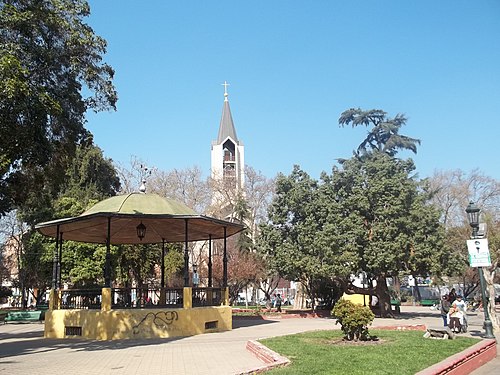
San Bernardo is a city located in the Santiago Metropolitan Region of Chile, situated approximately 26 kilometers southeast of the capital, Santiago. It serves as the administrative center of the San Bernardo Province. The city was founded in 1891, although the area has a history that predates its formal establishment. Originally, it served as a rural location, attracting agricultural developments due to its fertile lands and favorable climate. Over the years, San Bernardo grew significantly, becoming an important urban area linked to Santiago's expanding metropolitan framework.
Today, San Bernardo is known for its diverse population and a mix of residential, commercial, and industrial zones. The city has several key infrastructures, including educational institutions, healthcare facilities, and cultural centers that contribute to the quality of life for its residents. In recent decades, it has experienced rapid urbanization, leading to an increase in housing developments and public services, as well as transportation improvements that connect it more efficiently to Santiago and other nearby regions. Notably, the city's proximity to the capital has turned it into a popular area for commuters seeking a more affordable cost of living while still maintaining access to the metropolitan amenities.
San Bernardo also boasts a variety of recreational spaces and local attractions, such as parks and sporting facilities, which foster community engagement and leisure activities. The economy is supported by its industrial sectors, which include logistics, manufacturing, and retail, serving both local and regional markets. The city reflects a blend of traditional Chilean culture and modern urban life, making it a noteworthy example of the evolution of suburban settlements in the Santiago area. As San Bernardo continues to grow, it faces challenges typical of urban centers, such as need for infrastructure improvements and managing the balance between development and maintaining quality of life for its residents.
Facts about San Bernardo
- San Bernardo is home to the historic San Bernardo Church, a beautiful architectural landmark with significant cultural importance.
- The city is known for its vibrant community festivals, including the Fiesta de la Primavera, which celebrates the arrival of spring with parades and cultural events.
- San Bernardo has a rich industrial history, serving as an important hub for manufacturing and logistics in the Santiago Metropolitan Region.
- The city was officially founded on November 9, 1891, and was named after St. Bernard of Clairvaux, reflecting its Catholic heritage.
- San Bernardo features the Parque O'Higgins, a notable park that serves as a recreational area for residents and visitors, including walking trails and green spaces.
- It is also recognized for its diverse culinary scene, with a variety of traditional Chilean food options and local markets, especially known for their empanadas.
- The city is located just 23 kilometers from downtown Santiago, making it a critical commuter town for those working in the capital.
- San Bernardo is home to the historic Estación San Bernardo, a train station that serves as a key transport link for residents traveling to Santiago and beyond.
- The city plays a vital role in the education sector, with several important schools and institutions that contribute to its local economy and community development.
- San Bernardo was one of the first cities in Chile to implement a recycling program, showcasing its commitment to environmental sustainability.