San Luis, Argentina
- 169,947 people
- 13 places to visit
- -33.3017, -66.3378
Places to Visit (13)
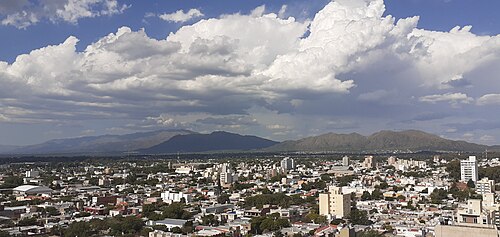
San Luis is a city located in the central region of Argentina, serving as the capital of San Luis Province. Founded on April 16, 1594, by the Spanish explorer Juan de Salazar, the city has evolved significantly since its establishment, reflecting a blend of colonial heritage and modern development. Situated at an elevation of approximately 800 meters (2,600 feet) above sea level, San Luis lies at the foothills of the Sierra de San Luis mountain range and is bisected by the Río Conlara. The city is characterized by its pleasant Mediterranean climate, with warm summers and mild winters, attracting both residents and tourists.
Economically, San Luis has a diverse base that includes agriculture, livestock, and growing industrial sectors. The province is known for its production of olives, wine, and various fruit crops, bolstered by its favorable climate and fertile lands. In recent years, the provincial government has promoted initiatives to attract investment, resulting in industrial parks and infrastructure development designed to enhance economic growth. The city has also invested in technology and education, with institutions such as the National University of San Luis contributing to the local workforce development.
Culturally, San Luis hosts a range of attractions and events reflecting its rich history and traditions. The city's historical center features colonial architecture, parks, and squares that are popular with both locals and visitors. Notable landmarks include the Basilica de San Luis Gonzaga, which showcases intricate baroque elements, and the Plaza Pringles, a vibrant public space often used for cultural activities and festivals. Annual events such as the Fiesta Nacional de la Música, celebrating local and national musical talents, further enrich the cultural landscape of San Luis. With its mix of history, economic potential, and cultural vibrancy, San Luis stands out as an important city in Argentina’s diverse tapestry.
Facts about San Luis
- San Luis is unique for its strategic location at the intersection of several major routes, making it a vital transportation hub in Argentina.
- The city is renowned for its rich cultural heritage, including the San Luis Architectural Festival that showcases local and international architectural talent.
- San Luis has a distinct climate, characterized by a semi-arid environment, setting it apart from other cities with more diverse weather patterns.
- The city's history dates back to its founding in 1594, and it played an important role during the Argentinian War of Independence.
- San Luis hosts the 'Festival Nacional del Futbol Infantil,' one of the largest children's soccer tournaments in Argentina, promoting youth sports.
- The region is known for its unique geological formations, particularly the Sierras de San Luis, which offer opportunities for outdoor activities and ecotourism.
- San Luis is home to the famous Parque Nacional Quebrada del Condorito, where visitors can observe the Andean condor in its natural habitat.
- The city is the first in Argentina to adopt a program of progressive municipal legislation focused on sustainability and eco-friendliness.
- San Luis features a remarkable network of 3,000 km of irrigation-based agricultural land, making it a significant contributor to Argentina's agricultural output.
- It has a thriving artistic community, notably in music and dance, with regular festivals celebrating local folklore and contemporary arts.