Sanaa, Yemen
- 1,937,451 people
- 11 places to visit
- 15.3545, 44.2064
Places to Visit (11)
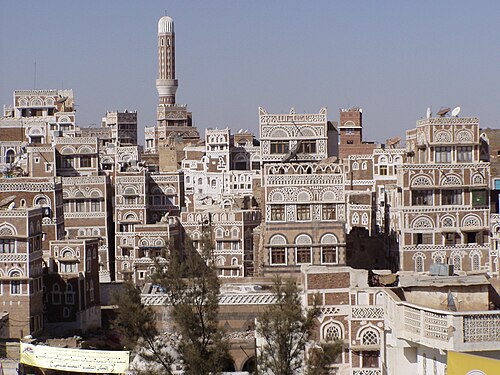
Sanaa, the capital city of Yemen, is one of the oldest continuously inhabited cities in the world, with a history that spans over 2,500 years. Located in the western part of the country at an elevation of approximately 2,300 meters (7,500 feet) above sea level, it serves as a cultural and political hub. Known for its distinctive architecture, Sanaa features numerous multi-story tower houses constructed from rammed earth mixed with decorated plaster, earning it a UNESCO World Heritage designation in 2010. The Old City of Sanaa is particularly notable for its unique buildings, intricate doorways, and elaborately adorned windows, reflecting the rich historical and cultural heritage of Yemen.
Over the centuries, Sanaa has played a significant role in regional trade and politics. It was historically a crossroads for merchants traveling on the ancient incense trade routes and has been a focal point for various dynasties and empires, including the Himyarites, and Islamic caliphates, and the Zaydi imams. The city served as the capital for several Yemeni regimes, influencing its political landscape. However, in recent years, Sanaa has faced severe challenges due to ongoing conflict and humanitarian crises. The civil war that erupted in 2015 has resulted in widespread destruction, economic hardship, and significant displacement of its population. Despite these difficulties, Sanaa's rich cultural heritage continues to resonate, with efforts by locals and organizations to preserve its historical sites and traditions amid the turmoil. Today, Sanaa remains a symbol of resilience in the face of adversity, reflecting the complexities of Yemen's past and present.
Facts about Sanaa
- Sanaa is one of the highest capital cities in the world, sitting at an altitude of approximately 2,200 meters (7,218 feet) above sea level.
- The Old City of Sanaa is a UNESCO World Heritage site, known for its unique architectural style characterized by tower houses made of rammed earth and their intricate ornamentation.
- Sanaa has a rich history, dating back over 2,500 years, making it one of the oldest continuously inhabited cities in the world.
- The city is famous for its distinctive buildings with multicolored stained glass windows and decorative motifs, often adorned with intricate patterns and geometric designs.
- Sanaa is home to the Great Mosque of Sanaa, one of the oldest mosques in the Islamic world, which dates back to the 7th century and contains remarkable historical artifacts.
- During the medieval period, Sanaa served as a center of trade and scholarship, attracting scholars and merchants from across the Arabian Peninsula and beyond.
- The city is known for its unique culinary dishes, particularly 'saltah', a traditional Yemeni stew that is often served with a dollop of fenugreek froth called 'hilbeh'.
- Sanaa features a vibrant market scene, including the famous Souk Al-Melh, which is known for its spices, textiles, and handicrafts.
- The city has historically been a hub for the Zaydi sect of Shia Islam, influencing its culture and governance over the centuries.
- Sanaa's strategic location in the Yemeni highlands has made it an important military and political center throughout its history.