Santa Maria, Brazil
- 283,677 people
- 12 places to visit
- -29.6895, -53.7923
Places to Visit (12)
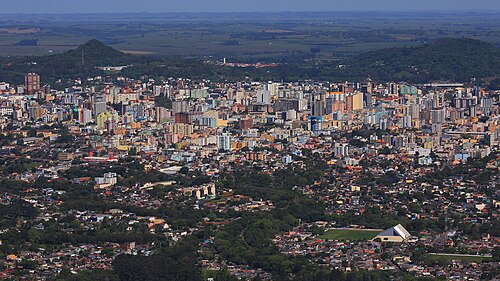
Santa Maria, located in the southern Brazilian state of Rio Grande do Sul, stands out as a significant urban center with a rich history and vibrant cultural landscape. Founded on May 13, 1837, the city has evolved from a small settlement into a thriving municipality, currently housing around 280,000 residents. The city is nestled at an altitude of approximately 95 meters and is characterized by its temperate climate, with warm summers and cool winters. As a prominent hub of education and agriculture, Santa Maria is home to the Federal University of Santa Maria (UFSM), which is one of the largest and most important educational institutions in the region, attracting students from across Brazil and beyond.
Economically, Santa Maria benefits from a diverse base, with agriculture, livestock, and commerce playing pivotal roles. The surrounding region is known for its fertile land, producing crops such as rice, soybeans, and tobacco, while the livestock sector, particularly dairy and beef production, is equally significant. The city's strategic location—being situated at the intersection of major highways—facilitates trade and transportation, enhancing its economic development. In addition to its economic strengths, Santa Maria boasts a rich cultural scene, with a variety of festivals, musical events, and artistic expressions that celebrate the local heritage. Events like the Festa Nacional do Fogo do Conselho are emblematic of the city’s traditions, drawing visitors and cultivating a strong sense of community pride. With a blend of educational opportunities, economic diversity, and cultural richness, Santa Maria is poised as an influential city within Brazil's southern region.
Facts about Santa Maria
- Santa Maria is known as the 'Mother of the Army' because it is home to a significant military presence, including the first Army Aviation School in Brazil.
- The city is situated in the central part of Rio Grande do Sul, making it a strategic hub for agriculture, particularly in rice production and cattle ranching.
- Santa Maria is renowned for its rich cultural scene, hosting the annual 'Festa Nacional do Pêssego' (National Peach Festival), celebrating local agriculture and community.
- The city's historic architecture includes the Cathedral of Santa Maria, an impressive neo-Gothic structure that stands as a symbol of the city.
- Santa Maria is home to one of the largest universities in the state, Universidade Federal de Santa Maria (UFSM), which contributes to the city's vibrant student population and academic contributions.
- The city played a crucial role in Brazil's aviation history, being the location where the first pilot training schools were established in the country.
- Santa Maria hosts a large public park called Parque Tancredo Neves, which serves as a social and recreational space for residents and visitors alike.
- The region surrounding Santa Maria is rich in natural beauty, with attractions such as the nearby Parque Natural Municipal do Ibirapuitã, which offers opportunities for outdoor activities.
- Santa Maria has a strong sense of community and local tradition, with many festivals and events that celebrate the city's cultural heritage and local customs.
- The city is recognized for its diverse cuisine, especially traditional southern Brazilian dishes, reflecting the influence of European immigrants who settled in the area.