Santiago de Compostela, Spain
- 97,849 people
- 19 places to visit
- 42.8769, -8.5442
Places to Visit (19)
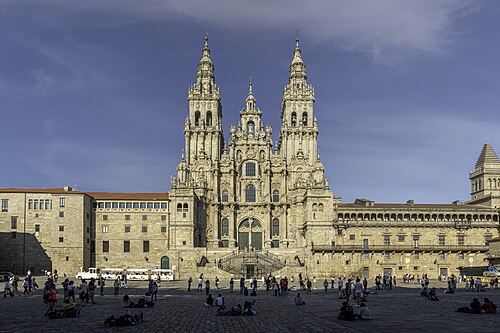
Santiago de Compostela, the capital of the northwestern Spanish region of Galicia, is a city rich in history and culture, most famously known as the pilgrimage destination for the Camino de Santiago, a network of routes leading to the shrine of Saint James the Apostle. This UNESCO World Heritage site is renowned for its stunning Cathedral, which is a masterpiece of Romanesque architecture dating back to the 11th century. The cathedral is considered one of the most important religious structures in Spain and serves as the burial site of Saint James, attracting thousands of pilgrims and tourists each year. The city's historical significance has made it a focal point of devotion and an essential part of European religious history.
Beyond its religious importance, Santiago de Compostela boasts a vibrant cultural life, characterized by a blend of Galician heritage and contemporary artistic expression. Its old town is a maze of narrow streets, ancient buildings, and lively squares, where visitors can find local markets, traditional Galician cuisine, and various cultural events throughout the year, including the famous Feast of Saint James in July. The city's university, one of the oldest in the world, was founded in 1495 and plays a vital role in student life and academic research, contributing to the intellectual atmosphere of the city. With its unique blend of history, spirituality, and modernity, Santiago de Compostela continues to be a significant cultural and pilgrimage center in Europe.
Facts about Santiago de Compostela
- Santiago de Compostela is renowned as the final destination of the Camino de Santiago, a major historical pilgrimage route in Europe.
- The city is home to the Cathedral of Santiago de Compostela, a UNESCO World Heritage Site and one of the most significant Romanesque structures in Spain.
- Santiago de Compostela is considered the burial site of Saint James the Great, one of Jesus's apostles, making it a vital center for Christian pilgrimage.
- The city was designated a European City of Culture in 2000, highlighting its rich artistic and cultural heritage.
- The historic old town of Santiago de Compostela features narrow medieval streets that attract thousands of tourists each year.
- The local cuisine of Santiago de Compostela is famous for its seafood, particularly octopus, and traditional dishes like 'pulpo a la gallega'.
- The city hosts the annual Festival of Saint James on July 25, celebrating its patron saint with processions, music, and cultural events.
- In 2018, Santiago de Compostela was recognized as a UNESCO Creative City of Gastronomy for its unique culinary traditions.
- Santiago has a significant student population due to its prestigious university, which is one of the oldest in the world, founded in 1495.
- The Rúa do Franco is a famous street in Santiago de Compostela, known for its array of tapas bars and vibrant nightlife, distinguishing it from other Spanish cities.