Santiago de Cuba, Cuba
- 555,865 people
- 6 places to visit
- 20.0169, -75.8302
Places to Visit (6)
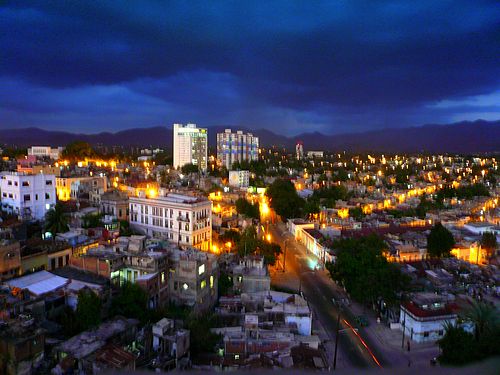
Santiago de Cuba, located on the southeastern coast of the island, is the second-largest city in Cuba and serves as the capital of the Santiago de Cuba Province. Established in 1515 by Spanish conquistador Diego Velázquez de Cuéllar, it is one of the oldest cities in the country, known for its rich historical and cultural significance. Santiago played a vital role in the colonial era and served as the capital of Cuba for a short period. The city is nestled between the Sierra Maestra mountains and the Caribbean Sea, providing a stunning natural backdrop characterized by scenic landscapes and a tropical climate.
Culturally, Santiago de Cuba is renowned as the birthplace of various genres of Cuban music, including son and bolero, which have influenced music worldwide. The city hosts the famous Carnival of Santiago de Cuba, celebrated in July, which features lively parades, colorful costumes, and traditional music, reflecting the African and Spanish heritage of the region. Santiago is also home to various important landmarks, such as the Castillo del Morro, a historic fortress that guards the entrance to Santiago Bay, and the Basilica del Cobre, a significant pilgrimage site dedicated to Our Lady of Charity, the patroness of Cuba. The city was a focal point during the Cuban Revolution and continues to embody the spirit of Cuban resilience and identity.
With a population of over 500,000 people, Santiago de Cuba is a vibrant urban center that has managed to preserve its historical charm while adapting to modern influences. The architecture features colonial-style buildings, vibrant streets, and cultural institutions such as the Museo de la Imagen and the Casa de la Música, where visitors can experience the local music scene. Furthermore, its proximity to the Sierra Maestra Mountains offers opportunities for outdoor activities, including hiking and exploring the national parks. Santiago de Cuba stands out as a city that balances its deep-rooted history with contemporary life, making it a pivotal destination for those looking to experience the cultural heartbeat of Cuba.
Facts about Santiago de Cuba
- Santiago de Cuba is known as the birthplace of Cuban son music, which has significantly influenced various genres, including salsa.
- The city played a pivotal role in the Cuban Revolution as the site where Fidel Castro and his followers launched their initial attack in 1953 at the Moncada Barracks.
- Santiago de Cuba is home to the historic Castle of San Pedro de la Roca, a UNESCO World Heritage Site that dates back to the 17th century and is an exemplary piece of military architecture.
- It hosts the annual Carnaval de Santiago de Cuba, one of the largest and most vibrant carnivals in the Caribbean, celebrated for its colorful parades and rich cultural expressions.
- Santiago de Cuba is the second-largest city in Cuba and is located on the southeastern coast, giving it a distinct Caribbean charm and cultural blend compared to Havana and other cities.
- The city is known for the Basilica del Cobre, an important pilgrimage site for Catholics, which honors the Virgen de la Caridad del Cobre, the patron saint of Cuba.
- Santiago de Cuba has a strong Afro-Cuban heritage, with a significant influence of African culture that is evident in its music, dance, and religious practices.
- It is famous for the Sierra Maestra mountain range nearby, which has rich biodiversity and is historically significant as the revolutionary base for Fidel Castro.
- Santiago de Cuba was the first city in Cuba to be established by the Spanish in 1515, making it one of the oldest cities in the country.
- The city is known for its unique architecture, which showcases a blend of colonial, baroque, and modern styles, distinguishing it from the more uniform styles seen in Havana.