Santo André, Brazil
- 662,373 people
- 15 places to visit
- -23.6789, -46.5367
Places to Visit (15)
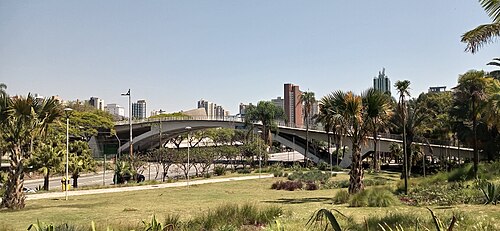
Santo André is a municipality located in the state of São Paulo, Brazil, and is part of the Greater São Paulo metropolitan area. Founded on April 8, 1553, it was originally established as a small village and has since evolved into a significant urban center. As of the latest estimates, the population of Santo André is approximately 700,000 residents, making it one of the most populous cities in the state. The city is strategically situated about 20 kilometers east of São Paulo and covers an area of 175.67 square kilometers. Santo André is well-connected through a network of public transportation, including buses and the São Paulo Metro, which facilitates easy access to neighboring municipalities and the capital itself.
The economy of Santo André is diverse, with industries such as manufacturing, commerce, and services playing crucial roles. Historically, the city has been a hub for textile and automobile manufacturing, attracting a considerable workforce. In recent years, there has been a shift toward technology and services, with many businesses establishing operations in the area. Alongside its economic significance, Santo André is known for its cultural institutions, parks, and recreational areas which contribute to the overall quality of life for its residents. Notable landmarks include the Central Square, which hosts various cultural events, and the historic Santo André Cathedral, an architectural symbol of the city. Santo André also emphasizes education and has multiple public and private institutions that provide a range of academic opportunities.
Santo André is characterized by a rich cultural scene, with numerous theaters, museums, and galleries showcasing local talent and heritage. The city's annual events, such as festivals and parades, reflect its vibrant community spirit and diverse population. Furthermore, Santo André is also notable for its commitment to sustainability and urban development, focusing on improving public spaces and green areas to enhance the quality of life for its inhabitants. As a significant urban center within the Greater São Paulo area, Santo André embodies a blend of historical significance and modern development, making it an essential part of the fabric of Brazil's largest metropolis.
Facts about Santo André
- Santo André is part of the Greater São Paulo area and is known for its significant industrial development, which played a pivotal role in the economic growth of the region.
- The city is home to the Parque Central, a large urban park that features a lake, walking paths, and a variety of recreational facilities, distinguishing it as one of the largest green spaces in the region.
- Santo André was one of the first municipalities in Brazil to establish a municipal public transport system, with the introduction of trolleybuses in the 1940s.
- The city has a rich cultural heritage and hosts the 'Festival de Inverno', an annual winter festival that showcases local music, theater, and culinary arts.
- Santo André is significant for its educational institutions, including UFABC (Federal University of ABC), which is recognized for its innovative approach to higher education and research.
- The city features the historic 'Igreja Matriz de Santo André Apóstolo', a beautiful church dating back to the 18th century, which reflects the city's colonial architecture.
- Santo André has a reputation for being a hub of Brazilian soccer, with several professional clubs, including the renowned 'Santo André Futebol Clube'.
- In 2017, Santo André was recognized as a 'Smart City' for its initiatives in urban mobility, sustainability, and technology integration, setting it apart from many other Brazilian cities.
- The city is located at the confluence of major highways, making it a strategic point for logistics and distribution in the São Paulo metropolitan area.
- Santo André is known for its cultural diversity, with a significant population of immigrants, particularly from Italy, Japan, and the Middle East, contributing to a rich culinary and cultural scene.