Santos, Brazil
- 433,656 people
- 17 places to visit
- -23.9592, -46.3318
Places to Visit (17)
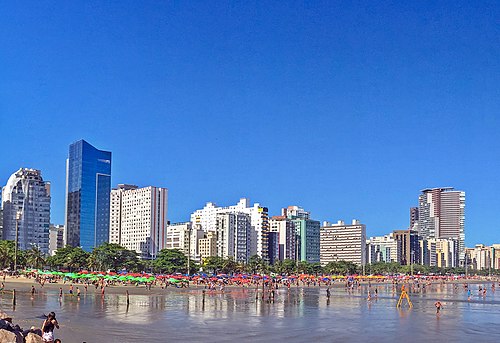
Santos, a coastal city in the state of São Paulo, Brazil, is renowned for its picturesque beaches, rich history, and vibrant port activities. Founded in 1546, it is one of the oldest cities in Brazil, originally established as a starting point for Portuguese explorers and later becoming a significant hub for the sugar trade in the 19th century. Its port, the largest in Latin America, plays a crucial role in the country's economy, handling a vast array of exports, predominantly coffee, soybeans, and other agricultural products. The city has also developed a reputation as a key center for tourism, thanks to its stunning stretches of beach, including the famous Gonzaga and José Menino beaches, which attract both locals and international visitors.
In addition to its natural beauty, Santos boasts a rich cultural landscape. The city's historic center features well-preserved colonial architecture, including the Cathedral of Santos and the Bolsa do Café, a former coffee exchange that showcases the city's economic history. The Museu do Porto de Santos provides insights into the port's significance and the transformation of the area over the centuries. Santos is also home to several parks and green spaces, including the renowned Orquidário Municipal, which houses a diverse array of flora and fauna. Sporting enthusiasts can enjoy the city's passionate football culture, predominantly centered around the famous Santos Futebol Clube, which has produced legendary players like Pelé. Moreover, the city hosts various cultural festivals and events throughout the year, celebrating its diverse heritage and community spirit, making Santos a dynamic place to live and visit.
Facts about Santos
- Santos is home to the largest port in Latin America, which plays a crucial role in Brazil's economy and international trade.
- The city has one of the longest beaches in Brazil, called Gonzaga Beach, spanning over 5 kilometers, making it a popular destination for tourists.
- Santos was the first city in Brazil to install an electric tramway in 1900, showcasing its early adaptation of modern technology.
- The Santos Futebol Clube, founded in 1912, is one of Brazil's most famous football clubs and is known for producing legendary players like Pelé.
- Santos has the world's largest coffee museum, the Museu do Café, which highlights the significance of coffee cultivation in the region's history.
- The city is famous for the 'Orchid Festival', an annual event that celebrates the diverse species of orchids native to Brazil.
- Santos has the largest number of high-rise buildings in Brazil outside of São Paulo, giving it a unique skyline along the coast.
- The city's historic center is home to numerous well-preserved colonial buildings, including the impressive Santos Cathedral and the Coffee Stock Exchange.
- Santos is known for having one of the most expansive urban parks in Brazil, the Parque da Ribeira, which features a rich variety of flora and fauna.
- Santos has a unique underground drainage system, partly built by German engineer Otto D. M. D'orleans in the late 19th century, designed to prevent flooding in the low-lying areas of the city.