Sarajevo, Bosnia and Herzegovina
- 696,731 people
- 17 places to visit
- 43.8562, 18.4131
Places to Visit (17)
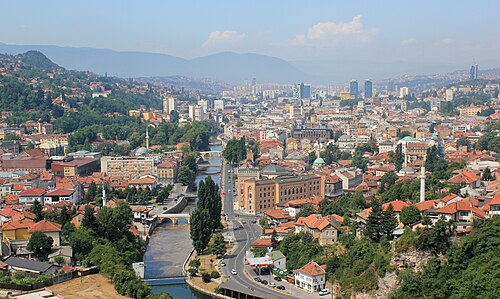
Sarajevo, the capital of Bosnia and Herzegovina, is a city steeped in history and cultural diversity. Nestled in a valley surrounded by the Dinaric Alps, it has long been a crossroads between Eastern and Western civilizations. The city has a population of approximately 275,000, making it the largest in the country. Sarajevo's rich tapestry of religions and cultures is reflected in its architecture, where Ottoman influences are visible in the historic Baščaršija bazaar and the iconic Gazi Husrev-beg Mosque, while Austro-Hungarian structures like the National Museum and the City Hall showcase its more recent European heritage. This melding of cultures has earned the city the nickname "Jerusalem of Europe," due to its significant Muslim, Orthodox Christian, Jewish, and Catholic populations.
Sarajevo is also known for its tragic history, most notably the assassination of Archduke Franz Ferdinand in 1914, an event that sparked World War I. The city endured a brutal siege during the Bosnian War from 1992 to 1995, leading to profound social and physical scars that are still visible today. Despite these challenges, Sarajevo has made significant strides towards regeneration and reconciliation. The annual Sarajevo Film Festival, established in 1995, has become one of the leading film festivals in Southeast Europe, fostering a vibrant arts scene. Additionally, the city's historic sites, such as the Latin Bridge, the Tunnel of Hope, and various museums, serve as reminders of its tumultuous past while also attracting tourists from around the world. Today, Sarajevo is a symbol of resilience and cultural harmony, representing a unique blend of history and modernity.
Facts about Sarajevo
- Sarajevo is known as the 'Jerusalem of Europe' due to its multicultural heritage and the coexistence of various religions, including Islam, Orthodox Christianity, and Catholicism.
- The city was the site of the assassination of Archduke Franz Ferdinand in 1914, an event that sparked World War I.
- Sarajevo hosted the Winter Olympics in 1984, making it the first city in a socialist country to do so.
- The Baščaršija district in Sarajevo is famous for its old bazaar and its stunning Ottoman architecture, featuring the Gazi Husrev-beg Mosque.
- The Siege of Sarajevo during the Bosnian War (1992-1996) was one of the longest sieges in modern history, lasting 1,425 days.
- Sarajevo is home to the Latin Bridge, which is the historic site of the assassination that triggered World War I.
- The city has a unique blend of Eastern and Western influences, evident in its cuisine, architecture, and social life.
- Sarajevo is also known for its film festival, the Sarajevo Film Festival, which was established in 1995 and has become one of the most significant film festivals in Southeast Europe.
- The Sarajevo tunnel, known as the Tunnel of Hope, was a lifeline for residents during the siege, allowing for the transport of goods and people.
- The city features the Sarajevo War Tunnel Museum, which preserves the history and memories of the siege and emphasizes the resilience of its people.