Sarcelles, France
- 57,979 people
- 9 places to visit
- 48.9973, 2.3785
Places to Visit (9)
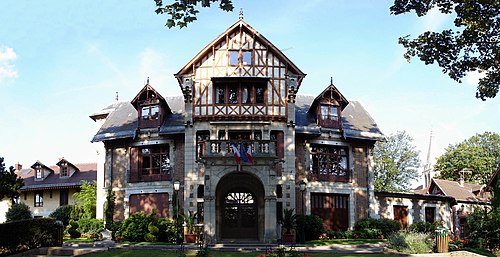
Sarcelles is a suburb located in the Val-d'Oise department in the Île-de-France region of northern France, approximately 16 kilometers (10 miles) north of Paris. It is part of the Greater Paris metropolitan area and is known for its demographic diversity and urban development. Established as a town in the 14th century, Sarcelles underwent significant growth in the mid-20th century, particularly during the 1960s, when it became a focal point for housing the influx of immigrants coming to France. This shift shaped its multicultural landscape, as the population now includes a mixture of cultures, primarily from North Africa, Sub-Saharan Africa, and the Mediterranean region.
Sarcelles is characterized by a variety of residential and commercial developments, with sectors that range from mixed-use urban centers to quiet suburban neighborhoods. The town is often perceived as a symbol of the challenges and opportunities faced by post-war suburban areas in France, grappling with issues of social integration, economic inequality, and urban development. Despite facing some negative stereotypes in national media regarding crime and social unrest, Sarcelles has notable community initiatives and cultural events that celebrate its diversity. The local government has focused on urban renewal projects aimed at improving public spaces, enhancing public transport connections, and promoting local businesses, with the Sarcelles shopping center serving as a hub for retail activity.
Transport links in Sarcelles are facilitated primarily through the RER D and bus services, providing residents with access to central Paris and surrounding suburbs. The town's educational institutions, parks, and recreational facilities contribute to its appeal as a place to live, particularly for families. Sarcelles is also home to historical sites, such as the Church of Saint-Denis, which dates back to the 12th century and reflects the town's long-standing architectural heritage. Overall, Sarcelles is a microcosm of contemporary urban life in France, balancing its rich history with the vibrant realities of a modern-day multicultural community.
Facts about Sarcelles
- Sarcelles is often referred to as the 'Little Jerusalem' because of its significant Jewish population and cultural influence, making it a unique community within France.
- The city was heavily influenced by post-World War II urbanization, which led to the rapid construction of housing projects in the 1950s and 1960s, a phenomenon distinct from many other French towns.
- Sarcelles has a notable diversity, with a mix of cultures and ethnicities, particularly due to waves of immigration from North Africa and other regions, setting it apart from more homogeneous towns.
- The architectural style of Sarcelles is primarily characterized by large housing estates and modernist buildings, distinguishing it from the historic architecture found in many other French cities.
- The municipality hosts the annual 'Festival of Cultures,' celebrating its multicultural population and promoting intercultural dialogue, a unique event not commonly found in other towns.
- Sarcelles is home to the 'Espace Culturel François Mitterrand,' a cultural complex that includes a library, a cinema, and event spaces, which is a hub for local cultural activities.
- The locality is served by the Sarcelles–Saint-Brice train station, which provides direct access to Paris, reflecting its role as a suburban commuter town with a unique urban identity.
- In the 1980s, Sarcelles was the center of significant social movements advocating for immigrant rights, distinguishing it as a focal point for urban social activism in France.
- The city's public artwork and graffiti scene have gained attention for their commentary on social issues, making Sarcelles a canvas for local artists and a site for urban cultural expression.
- Sarcelles was notably affected during the 2005 riots in France, which highlighted social tensions and added to its distinct identity as a focal point for discussions on urban issues and integration.